
















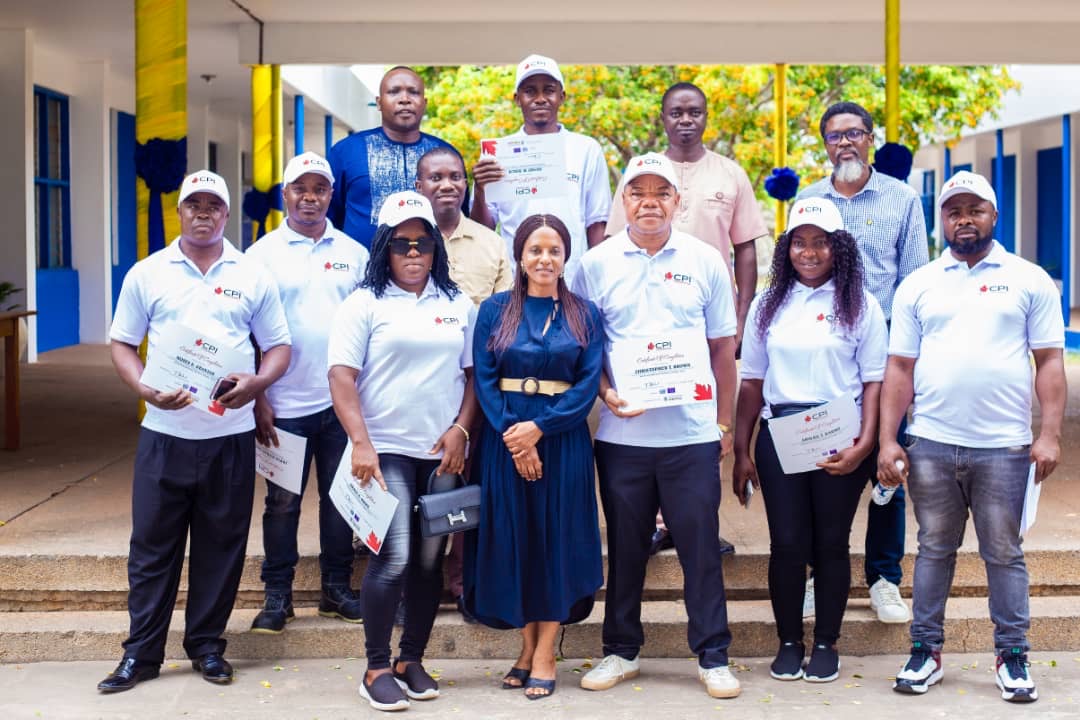
Seven Liberians have graduated from a rigorous six-month Train-the-Trainer programme at the Regional Maritime University (RMU) in Accra, emerging as certified instructors in welding, fabrication, plumbing, and pipework.
The milestone, achieved in collaboration with Corporate Professional Industrial (CPI) Liberia and sponsored by the United Nations Industrial Development Organisation (UNIDO), marks a strategic step toward closing the technical skills gap in Liberia and the wider West African region.
Of the seven, five are now certified TVET instructors in welding and fabrication—including one female—and two others, a male and a female, specialized in plumbing and pipework.
Dr. Jethro W. Brooks Jr., Acting Vice Chancellor of RMU, hailed the graduates not just as trainees but as future change-makers in Liberia’s skills development ecosystem.
“These graduates are going back not only with skills but with the mandate to train and build a new generation of professionals who will drive industrial growth and innovation in their home country,” Dr. Brooks emphasized.
The training is part of a broader European Union-supported initiative designed to revamp Liberia’s TVET delivery and create a sustainable pipeline of skilled workers equipped to meet the demands of modern industry.
Head of RMU’s Vocational Skills Training Center, Mr. Joe Felix Tetteh, underscored the transformational power of such programmes, noting their potential to reshape Liberia’s technical landscape.
“This initiative is about more than just skills — it’s about empowerment, employment, and national progress. We’re proud to support this effort and remain committed to the TVET agenda across the region,” Mr. Tetteh said.
Dr. Brooks was also honoured with a citation in recognition of his leadership in forging strong partnerships between academia and industry, and for his contributions to sustainable vocational development across West Africa.
Speaking on behalf of the graduates, Mr. Juwle Michael Warkie expressed deep gratitude to RMU and CPI, pledging to use the knowledge gained to uplift others in Liberia.
“This is a life-changing opportunity. We are ready to go back home and not just apply our skills but share them — to empower more young people and contribute meaningfully to national development,” he affirmed.
With their training complete, the seven new instructors are expected to play a pivotal role in Liberia’s efforts to expand and modernize its TVET sector — a move seen as essential for youth employment and sustainable economic growth.






