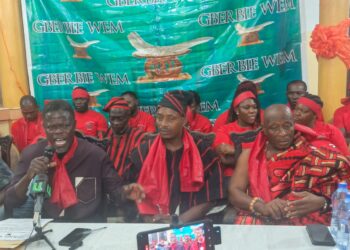
Former President John Dramani Mahama has urged all parties involved in the prolonged Bawku chieftaincy conflict to fully embrace ongoing peace mediation efforts to restore stability and development to the region.
During a speech in Bolgatanga, Upper East Region, as part of his nationwide Thank You Tour, Mahama emphasized that lasting peace in Bawku is critical for progress, urging factions to set aside hostilities and commit to dialogue.
Mahama highlighted the government’s ongoing peace-building initiatives, with Asantehene Otumfuo Osei Tutu II leading mediation efforts to find a mutually acceptable resolution.
“It is my hope that all parties who participated in last week’s mediation process will carefully consider the proposals and return with an open mind when negotiations resume in two weeks,” he stated.
The Bawku conflict, which has spanned several decades, escalated again in November 2021, resulting in:
- Over 250 deaths
- Destruction of property
- Forced closures of schools, hospitals, and markets
Mahama warned that socioeconomic development in the region would remain stagnant if violence and mistrust were not addressed.
“A nation divided by past wounds cannot march forward. Let us choose peace—not as a surrender, but as an act of courage to secure our collective future,” he urged.
The former president strongly condemned the recent killing of a military officer in Bawku, stressing that security personnel should not become targets of conflict they are deployed to resolve.
At the same time, he denounced the military’s reprisal attack, which resulted in the deaths of innocent civilians. Mahama called on the armed forces to use intelligence-driven methods to apprehend culprits rather than resorting to broad countermeasures that harm non-combatants.
“I send my condolences to the family of the fallen soldier and sympathize with all those affected by the military’s counteraction,” he added.
Mahama urged Bawku’s residents to move beyond past grievances and work together to rebuild their communities.
“History should remember us not for the battles we fought against one another, but for the unity we built in the face of disagreement,” he said.
With dialogue still ongoing, Mahama remains hopeful that stakeholders will prioritize peace, reconciliation, and sustainable development in the region.