
















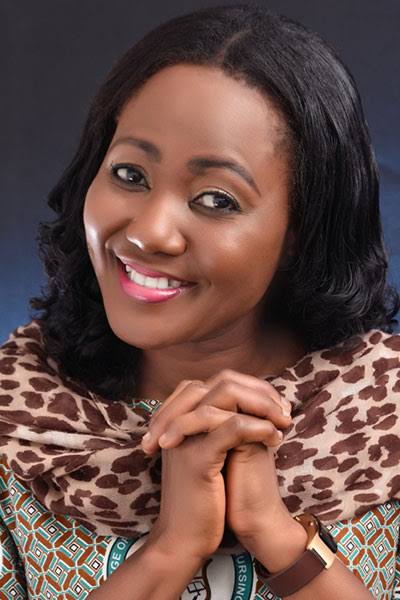
Corporate governance expert Rev. Angela Carmen Appiah has warned that President John Dramani Mahama’s decision to dissolve the governing boards of nine state-owned enterprises and public institutions could undermine institutional performance and discourage professionals from accepting leadership roles in the public sector.
The immediate past president of the Institute of Directors Ghana described the mass dissolution as “disturbing”, “very questionable” and “worrisome”, arguing that government has yet to adequately explain the basis for the decision.
Speaking on The Forum on Asaase Radio on Saturday, September 5, Rev. Appiah acknowledged the President’s authority to make statutory appointments but said the manner in which the decisions were executed raised serious corporate governance concerns.
“Dissolving nine boards is disturbing, it is very questionable and it’s worrisome and we haven’t been told the reason,” she said.
For Rev. Appiah, the central issue is not whether the President has the power to dissolve the boards, but how that power is exercised and whether sufficient consideration was given to the performance of the affected institutions.
“From where I sit what I see is the how,” she said.
She argued that government should first assess the performance of the affected institutions, identify specific management or financial weaknesses and determine whether there were actual breaches before taking sweeping action against their boards.
Her comments come amid renewed debate over the performance of state-owned enterprises following the release of the State Interests and Governance Authority (SIGA) report, which highlighted significant changes in the financial performance of SOEs.
Rev. Appiah questioned whether dissolving boards without properly distinguishing between poor and good performance could send the wrong signal to professionals serving on state institutions.
“If we disregard the profits made, the performance that has been made then what are we doing? Are we punishing good performance, are we disincentivizing the systems?” she asked.
She also warned that frequent political intervention could make experienced professionals reluctant to accept appointments to public institutions.
“We are even punishing those who are ready to go to the top to impact. Because why do I even go if politics can interfere,” she said.
Rather than relying on what she described as “kneejerk approaches”, Rev. Appiah urged government to use the findings of the SIGA report to identify weaknesses, strengthen internal controls and establish stronger ethical systems within state institutions.
She acknowledged that some SOEs had recorded profits but said the existence of profits did not necessarily mean their systems were functioning effectively.
“Have profits been made? Yes. Let’s acknowledge it we can even verify them. Then how come we made profits then end up losing so much. Then we can now address those gaps,” she said.
According to her, the focus should be on strengthening institutions rather than depending excessively on individual managers to prevent financial mismanagement and other forms of wrongdoing.
“If we strengthen a system and not an individual the system will get rid of these things because there would be internal controls,” she said.
Rev. Appiah consequently called for transparent engagement among ministers, government officials, corporate governance experts and other stakeholders to establish the reasons behind the board dissolutions and determine how state institutions can be governed more effectively.
She said the government should treat the SIGA report as an opportunity to institutionalise ethical practices and close governance gaps rather than simply replace personnel.
“Let’s look at where the breaches are so that we can institutionalise ethical practices. Otherwise, we will be doing these kneejerk approaches and it doesn’t help us,” she said.
She further urged government to reflect on the concerns raised by the report and use them to strengthen governance structures across Ghana’s state-owned enterprises.
“Let’s have these transparent conversations so that we understand the viewpoints then together we can hold hands and build,” Rev. Appiah said.






