
















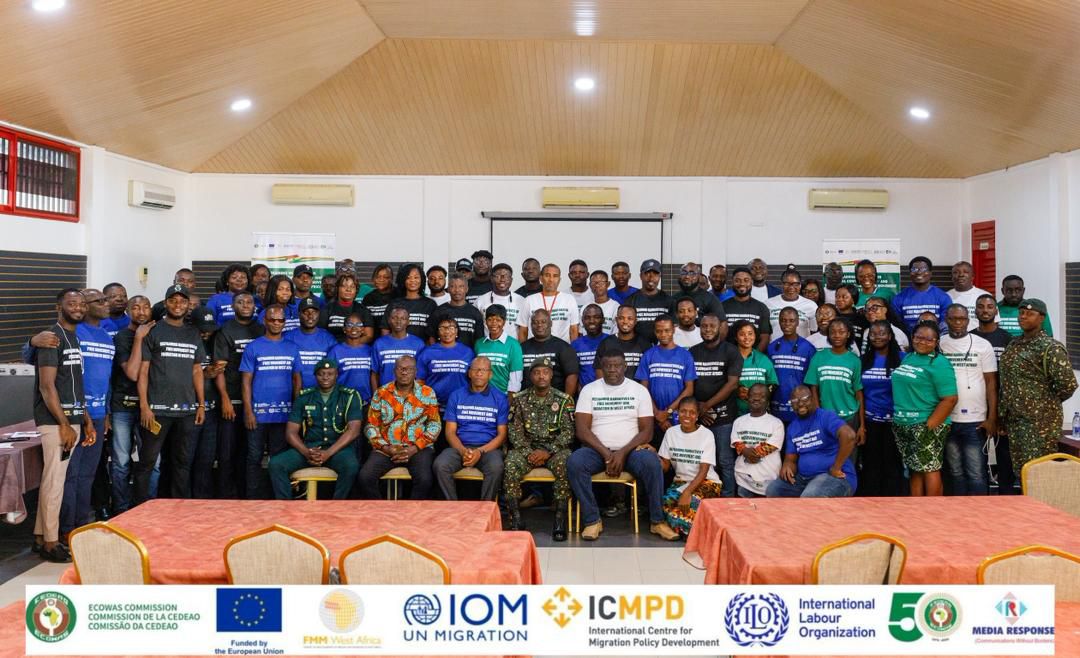
A renewed push for responsible journalism is gaining momentum as media professionals are being encouraged to reshape how migration issues are reported across West Africa.
At a capacity-building workshop in Ho, organised by Media Response Ghana with support from ECOWAS, participants were urged to adopt fact-based, development-oriented narratives that reflect the realities of regional mobility.
The training, held under the theme of reframing migration narratives, focused on equipping journalists, bloggers, and communication officers with practical digital storytelling skills while deepening their understanding of the ECOWAS Free Movement Protocol.
Facilitators stressed that inaccurate reporting—particularly linking migration to crime without evidence—can fuel xenophobia and undermine regional cooperation. Samuel Dodoo, Executive Director of Media Response Ghana, highlighted the need for journalists to distinguish clearly between lawful movement and criminal activities such as trafficking and smuggling.
Security officials also reinforced the importance of accuracy in reporting. Ghana Immigration Service representative Justice Kudzo Normeshie noted that understanding migration laws, including the Immigration Act 2000, is essential for producing informed and balanced coverage.
The workshop further underscored the evolving perception of migration as a driver of economic growth and regional integration rather than solely a security concern. Harrison Kofi Belley of the Ghana Journalists Association pointed out that media narratives play a critical role in shaping public understanding and policy direction.
Participants were encouraged to use their platforms to highlight the developmental benefits of free movement, including trade and labour mobility, while maintaining accuracy and ethical standards in reporting.
The initiative forms part of broader efforts to align media practice with regional integration goals and promote informed public discourse on migration across West Africa.






