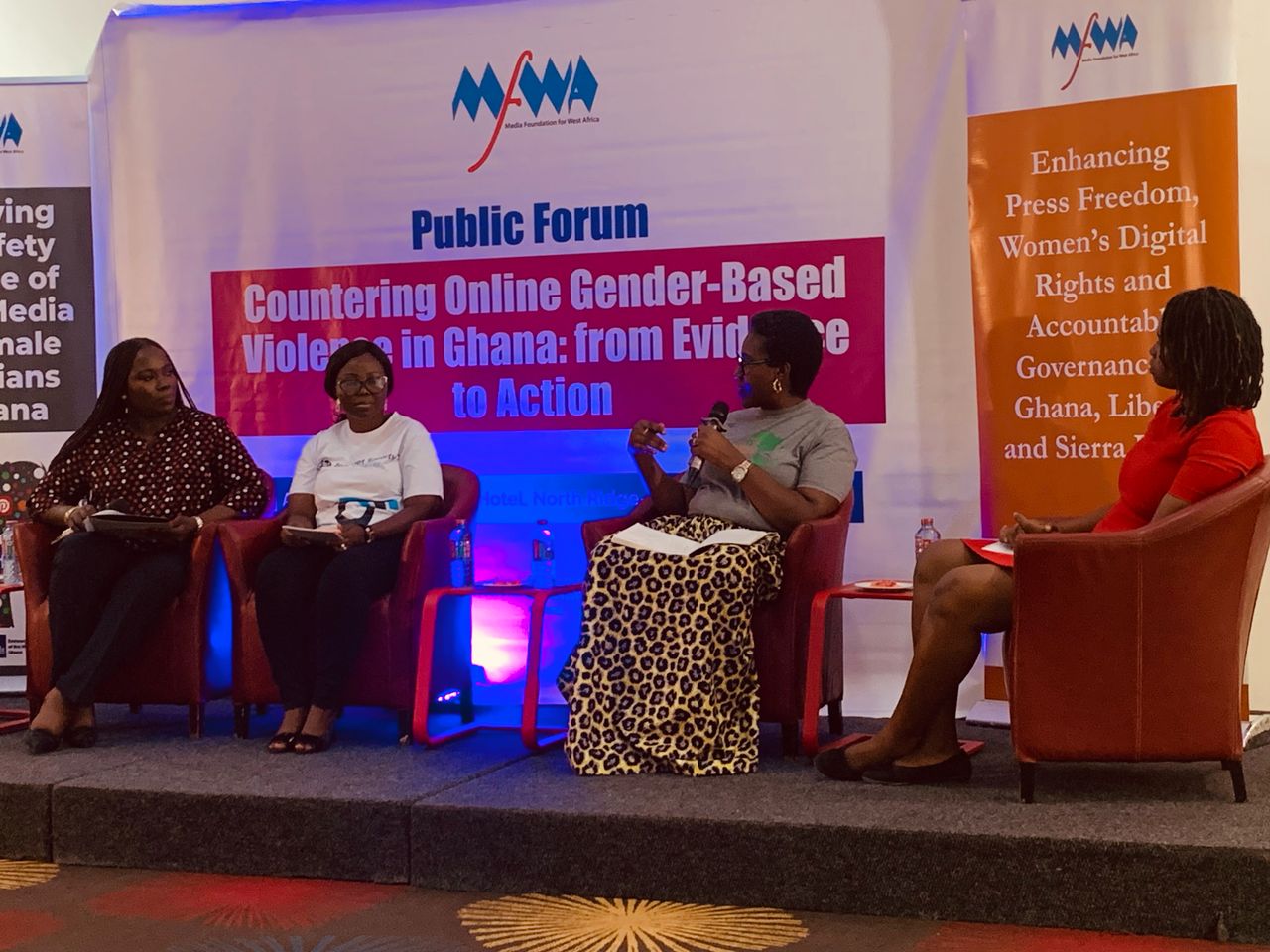
The Media Foundation for West Africa (MFWA) has raised urgent concerns about the growing issue of online gender-based violence (OGBV) and is calling for government action to implement strict policies aimed at protecting victims and addressing the harmful effects of digital abuse.
At a public forum in Accra, Ms. Dora Boamah Mawutor, Programme Director for Freedom of Expression and Digital Rights at MFWA, presented a damning report on the prevalence of OGBV in Ghana. The report, which analyzed five major social media platforms between August 2024 and March 2025, revealed 583 recorded incidents of online abuse, with X (formerly Twitter) accounting for the highest number at 237 cases. Facebook, TikTok, and Instagram followed closely in the report’s findings.
The report highlighted a troubling trend where many of the attacks were aimed at female public figures, particularly female politicians, presidential candidates, and other influential women. The majority of the online abuse came from male users who created anonymous accounts to insult, discredit, and silence these women, often using graphic language or spreading unfounded allegations.
Ms. Mawutor described the online attacks as a deliberate attempt to undermine women’s participation in public life. In the early months of the monitoring period, many female victims were subjected to degrading insults, including crude references to their personal lives, while others were falsely accused of unethical behavior, including allegations of sexual misconduct with political figures.
Among the most targeted individuals were high-profile women such as Madam Ellen Ama Daaku, a renowned advocate for women and children’s rights, who was subjected to 83 abusive posts; Mrs. Jean Mensa, Chairperson of the Electoral Commission, who faced 57 attacks; and Mrs. Samira Bawumia, the former Vice President’s wife, with 47 posts. Other notable women facing abuse included Vice President Professor Jane Naana Opoku-Agyemang and media personality Nana Aba Anamoah.
The MFWA’s report underscores that this online harassment is not just a reflection of misogyny, but a calculated strategy to intimidate and deter women from engaging in political discourse. To help combat this troubling trend, the MFWA, in partnership with the Dutch Foreign Ministry, has launched initiatives to support women in politics. These programs include training for female politicians and advocates on how to navigate the digital space safely and how to counteract online violence.
Ahead of the 2024 elections, 200 female politicians and 30 social media influencers have already participated in training sessions focused on online safety and resilience against gender-based harassment.
Ms. Kathleen Addy, Chairperson of the National Commission for Civic Education (NCCE), highlighted that the online abuse women face is rooted in deep-seated gender inequalities and cultural biases. She expressed hope that, despite the challenges, the online space could serve as a tool for empowering women and addressing online violence. Addy reaffirmed NCCE’s commitment to working alongside MFWA to protect women from digital harassment and to challenge societal norms that limit women’s political participation.
Madam Awo Aidan Amenya, Executive Director of Child Online Africa, condemned the exploitation of women who are paid to damage the reputations of others, calling it an unacceptable practice that further perpetuates online violence. She stressed the importance of digital literacy and emotional intelligence in combating such behaviors.
In a related statement, Corporal Gwendoline Abbey, a Digital Forensic Analyst at the Ghana Police Service’s Cyber Crime Unit, noted that the cases highlighted in the MFWA report mirrored numerous instances her unit had handled. She encouraged families of victims to support investigations, emphasizing that justice should take precedence over any concerns for family reputation.
The call for stricter policies to combat online gender-based violence is now louder than ever, with MFWA and its partners working to ensure a safer digital environment for women, particularly those in the public and political spheres.