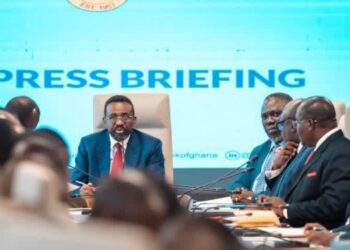
The Minority in Parliament is raising red flags over what it describes as a wasteful relaunch of Ghana’s chip-embedded biometric passport system, accusing the Ministry of Foreign Affairs of misusing $1.2 million in public funds.
Nana Asafo-Adjei Ayeh, Deputy Ranking Member on Parliament’s Foreign Affairs Committee, led the charge on Citi FM’s Eyewitness News on Wednesday, July 9, questioning the rationale behind spending such a substantial amount on a project he claims was already completed under the previous administration.
“This chip-embedded passport system was launched back in December 2024 under President Akufo-Addo,” Asafo-Adjei asserted. “So, this fanfare and relaunch is nothing but a duplication—and an expensive one at that. Spending $1.2 million on something that yields no additional value is simply unjustifiable.”
The Ministry of Foreign Affairs and Regional Integration announced the official roll-out of the enhanced passport system on April 28, highlighting several new features including a transition from biometric to chip-embedded technology, faster processing times, home delivery, and an integrated tracking system. Application fees were also slashed by 30%.
Ministry officials further touted security improvements, stating that the new passports include 175 advanced security features—up from 32 in the older version—and are now linked with the National Identification Authority’s database to ensure robust identity verification.
However, the Minority remains unconvinced, arguing that the previous government had already laid the groundwork for the new passport system, including procurement, pilot distribution of 50,000 booklets, and a confirmed supply agreement for 200,000 more.
“We’re calling on the Ministry to provide a full breakdown of the $1.2 million expenditure,” Asafo-Adjei said. “Ghanaians deserve to know exactly what this money was used for, especially when the foundation for this initiative was already in place.”
The criticism adds to growing calls for increased transparency in government spending, especially on high-cost public sector initiatives. The Ministry has yet to publicly respond to the Minority’s demand for a detailed account of the funds.