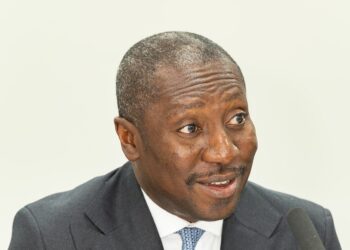
Efforts to remove the leadership of the Electoral Commission of Ghana and the Office of the Special Prosecutor have come to an end after the Chief Justice ruled that no prima facie case has been established to warrant further investigation.
Paul Baffoe-Bonnie determined that seven separate petitions filed against EC Chairperson Jean Mensa and her Deputies — Bossman Eric Asare and Samuel Tettey — as well as three petitions against Special Prosecutor Kissi Agyebeng, did not disclose sufficient grounds to proceed under constitutional requirements.
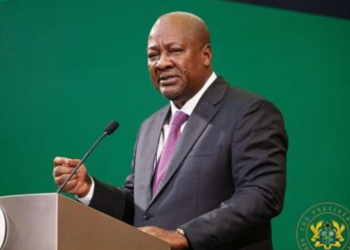
According to a statement issued by Felix Kwakye Ofosu, the petitions were referred to the Chief Justice by John Dramani Mahama on November 25, 2025, in accordance with Article 146 of the 1992 Constitution and Section 15 of the Office of the Special Prosecutor Act, 2017 (Act 959).
In a letter dated January 26, 2026, the Chief Justice informed the President that the petitions failed to establish a prima facie case, effectively halting the constitutional removal process at its preliminary stage. Without such a finding, there is no legal basis for the President to constitute a committee to investigate the allegations.
Article 146 of the Constitution outlines a strict procedure for the removal of members of the Electoral Commission and Justices of the Superior Courts, requiring an initial prima facie determination by the Chief Justice before any inquiry can be initiated. A similar threshold applies to the removal of the Special Prosecutor under Act 959.
The government statement described the outcome as evidence of adherence to due process, constitutionalism and the rule of law, noting that the ruling brings finality and clarity to the matter.
The EC Chairperson and her Deputies were appointed between 2018 and 2019, while the Special Prosecutor assumed office in 2021, with mandates to strengthen electoral integrity and advance the fight against corruption.