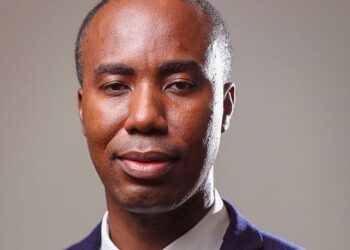
National affairs and economic development analyst Shepherd Ali has warned that the growing culture of political insults in Ghana could undermine the quality of democratic discourse and weaken the country’s democracy.
According to him, political actors and commentators are increasingly competing over who can deliver the harshest insults instead of presenting credible ideas and arguments capable of helping citizens understand national issues.
Mr Ali said the development was gradually turning Ghana’s political space into an environment where abusive language attracts greater attention than knowledge, evidence and constructive debate.
“It is becoming, it’s becoming so bad that now people are not competing for knowledge. People are competing for those who can insult more,” he said.
Speaking on Metro TV’s Good Afternoon Ghana on Friday, September 4, he stressed that political disagreements were an essential part of democracy but should be expressed through reasoned arguments rather than personal attacks.
He said Ghana could learn from political debates in other democratic jurisdictions, particularly in Europe, where heated disagreements often provide an opportunity for politicians to explain their positions and persuade people who hold opposing views.
“In Europe, there is debate, hot debate. But people use that platform to lay down their argument. They educate their audience. They let people who don’t even share the same view as them to gradually sway to their side,” he said.
Mr Ali said Ghana’s political conversations were, however, drifting away from that ideal, with insults increasingly becoming a dominant feature of public discussions.
“But we are now taking our space, and changing it into a wrestlemania of insult. And when we say democracy, it’s not demo insult. It is not demo insult. It is the ability to lay down your opinion,” he stated.
Public attention
The analyst said the problem was being compounded by the attention given to politicians and commentators who use offensive language, arguing that audiences were inadvertently rewarding abusive behaviour.
He urged Ghanaians to deliberately support political discussions that educate, inform and challenge ideas rather than those that generate attention through insults.
“We need to listen. Those educations from other political parties, we need to listen. But we are now feeding on the insult which is not helping us which over time can create a very chaotic situation,” he said.
Mr Ali warned that if insults continued to be normalised in political communication, the consequences could extend beyond partisan politics and affect the broader culture of public engagement.
“And this is what is now going to be a stumbling block for our democracy,” he cautioned.
He was particularly concerned about the influence of such behaviour on young people who are increasingly exposed to political exchanges through traditional and social media.
Mr Ali called on politicians, public figures, religious leaders and citizens to help restore civility to Ghana’s political discourse and demonstrate that disagreement can be expressed firmly without descending into abuse.
“Let it be a discussion so that we all get our young ones who are coming up there not to appreciate this insult,” he said.
As part of efforts to promote a healthier political culture, Mr Ali has launched a campaign against political insults, including undertaking a solo walk from Kasoa to Winneba.
He said the campaign was intended to encourage Ghanaians to embrace political debate based on ideas, evidence and mutual respect.
“I want everybody to come on board to understand that we can politics, we can share opinions, we can argue on points, we can, we can bring out anything that we think we want another person to understand without insulting,” he said.
If you want, I can also give you 10 stronger, punchier alternative headlines for this story.