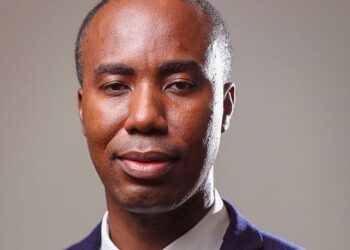
Ghana’s former diplomat and member of the New Patriotic Party (NPP) Vetting Committee, Professor Barfuor Adjei-Barwuah, has expressed concern over what he describes as the growing dominance of partisan politics and personal interests over the national interest.
According to him, Ghana has gradually lost the spirit of national commitment that once encouraged citizens to put the development of the country ahead of individual and political considerations.
Prof. Adjei-Barwuah said excessive political partisanship had created a culture in which political engagement was increasingly prioritised at the expense of serious discussions about Ghana’s long-term development.
Speaking on Eyewitness News on Tuesday, September 8, 2026, he lamented what he described as a significant change in the values that once shaped Ghanaian society.
“We have lost the Ghana spirit,” he said.
The former diplomat recalled a period when young Ghanaians were encouraged to pursue education, work hard and contribute to building a better country.
He said that expectation appeared to have weakened, with personal advancement and political affiliation increasingly influencing how many people approach national issues.
“This is not the Ghana that I said Nkrumah promised us,” he said, referring to the aspirations of an era when citizens believed hard work and commitment would contribute to creating opportunities and national progress.
Prof. Adjei-Barwuah argued that Ghana’s political environment had become excessively polarised, leaving little room for citizens to critically examine issues from the perspective of the country’s broader interests.
“The thing is, we have allowed ourselves to believe that all that the nation needs to do is to play politics,” he said.
He said the excessive focus on political polemics had also affected the quality of national discourse, with political arguments often taking precedence over meaningful debates about the country’s future.
“There is so much polemics in our system that people, I don’t think, even take the opportunity to think about the country,” he added.
According to him, the growing emphasis on individual interests has further pushed the national interest into the background.
“Most of us, we think about ourselves,” he said, stressing that “the nation is secondary. Very secondary.”
The NPP Vetting Committee member also raised concerns about the difficulty of maintaining integrity within Ghana’s political environment.
He argued that politicians who seek to act honestly could find themselves at a disadvantage in a system where political confrontation and self-interest have become increasingly entrenched.
“You can’t be an honest politician. It is very difficult,” he said.
Prof. Adjei-Barwuah said Ghana needed to change the prevailing political culture and encourage citizens and political actors to place national development at the centre of public discourse.
He maintained that the country’s future depended on recognising that political decisions have consequences for national development and that partisan interests should not always take precedence over the welfare of the country.
“We seem to think that politics is everything,” he said. “And politics is more of polemics than anything else.”
He therefore called for greater emphasis on the national interest and substantive discussions about Ghana’s development rather than allowing partisan politics to dominate the country’s public life.