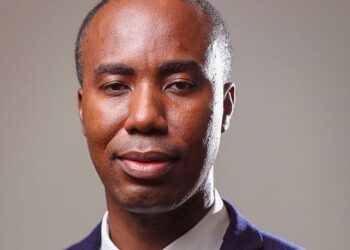
Convenor of the One Ghana Movement, Senyo Hosi, has warned that the growing economic and political influence surrounding illegal mining could make it increasingly difficult for successive governments to tackle galamsey decisively.
Mr Hosi said the challenge had moved beyond illegal mining itself, with galamsey becoming embedded in the economies of mining communities and, in his view, increasingly connected to political interests.
Speaking on Channel One TV’s The Point of View with Bernard Avle on Wednesday, September 30, he said President John Dramani Mahama was operating within economic and political constraints that could affect the government’s response to illegal mining.
According to Mr Hosi, the importance of gold to Ghana’s economy creates an additional complication because efforts to disrupt illegal mining could have consequences for communities and economic activity linked to the sector.
He argued that the government’s focus on economic stabilisation and President Mahama’s desire to establish an economic legacy could make a forceful approach to galamsey more difficult.
“He has a very real economic situation. He’s in pursuit of a legacy. What’s the biggest achievement of John Dramani Mahama since he became president? Think about it. The stabilisation of the economy. What has been the main driver of that? Gold. Of which you find a lot of galamsey,” he said.
Mr Hosi said these competing interests could create political risks for any government seeking to impose measures that significantly disrupt illegal mining.
He maintained that the issue was not unique to the current administration, arguing that successive governments could face similar difficulties because of the economic interests and political consequences associated with galamsey.
He also pointed to what he described as the growing political influence of illegal mining operators.
According to him, some operators were not only benefiting from the activity economically but were also increasingly participating in political processes through financing and direct political involvement.
“What is getting worse now is that galamsey has not just become something that you have a social capture; you actually have a political capture as well,” he said.
Mr Hosi’s comments come amid renewed debate over the effectiveness of enforcement operations against illegal mining. He has previously argued that raids and seizures alone cannot resolve the problem because galamsey remains economically attractive and deeply embedded in some mining communities.
He has advocated a shift towards formalising and modernising responsible small-scale mining, with government facilitating access to equipment, geological information, finance and improved processing methods while making compliance more economically attractive than illegal operations.
Mr Hosi has also argued that economic dependence on galamsey creates social tolerance within some communities, which can subsequently translate into political pressure against governments attempting to enforce restrictions on the activity.
He therefore maintained that addressing the illegal mining crisis would require more than periodic enforcement operations, with economic incentives, community livelihoods and the political environment also needing to be addressed.