
















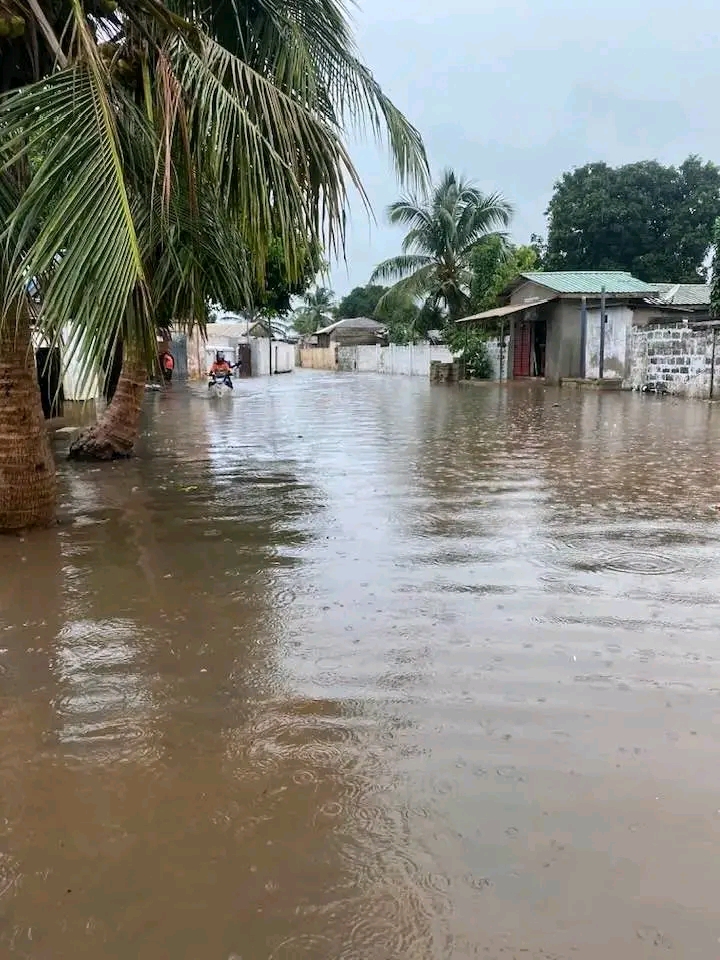
The Tema Metropolitan Assembly (TMA) has stepped up public health education and enforcement measures following recent floods in parts of the metropolis, warning residents of the serious health risks associated with contact with floodwaters.
According to the assembly’s Environmental Health Unit, floodwaters in urban communities often contain dangerous contaminants, including sewage, industrial waste, chemical runoff and animal droppings, making them a potential source of disease outbreaks.
Speaking to the Ghana News Agency (GNA), Environmental Health Officer Mr Benjamin Kwame Opare cautioned residents against walking through or standing in floodwaters, noting that such exposure could lead to infections such as cholera, typhoid fever and dysentery.
He explained that floodwaters become heavily polluted during periods of heavy rainfall, particularly when some individuals illegally dispose of human waste into drains and waterways.
Beyond disease transmission, Mr Opare highlighted several hidden dangers associated with floodwaters, including submerged open drains, sharp objects and the possibility of electrocution from damaged or fallen electrical cables.
He further warned that stagnant water left behind after floods creates ideal breeding conditions for mosquitoes, potentially increasing malaria cases in affected communities.
In response to the recent flooding incidents that displaced residents and affected several neighbourhoods, the TMA Environmental Health Unit has partnered with the National Disaster Management Organisation (NADMO) to implement a range of preventive interventions.
These include intensified public education campaigns through the media and marketplaces, inspections of flood-prone areas, and enforcement actions against owners of illegal structures obstructing waterways.
Mr Opare disclosed that notices were being served on individuals and businesses occupying drainage channels, warning that legal action would be taken against those who fail to remove such structures.
The assembly has also introduced emergency health measures at temporary shelters housing displaced residents. Environmental health officers are disinfecting the facilities, treating stagnant water to eliminate mosquito larvae, distributing insecticide-treated bed nets and monitoring occupants for signs of disease.
Additionally, handwashing stations have been installed to promote proper hygiene and reduce the risk of infections.
As part of the public awareness campaign, residents have been advised to boil drinking water or use approved purification tablets, discard food that has come into contact with floodwaters, disinfect homes after flooding and eliminate stagnant water around their premises.
Mr Opare urged residents to avoid direct contact with floodwaters whenever possible and to use protective gear such as rubber boots and gloves when exposure is unavoidable, stressing that prevention remains the most effective way to protect lives and public health during the rainy season.






