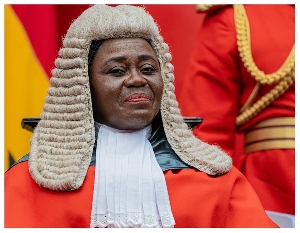
In a pointed reply to President John Dramani Mahama, Chief Justice Gertrude Torkornoo has rebuffed a third petition seeking her removal—this time from civic group Shining Stars of Ghana—by invoking the doctrine of res judicata and constitutional immunity provisions.
Shining Stars had accused her of “incompetence” and breaching the audi alteram partem rule in the Supreme Court’s January ruling on Afenyo Markin v. Speaker of Parliament & Attorney General, which voided the Speaker’s declaration of four parliamentary seats as vacant. They claimed the Speaker was never granted a hearing, nor able to file an affidavit, and argued that Torkornoo’s panel decision violated natural justice.
But in her April 7 response, Torkornoo noted that an identical petition by Prof. Stephen Asare had already been dismissed last December by President Nana Akufo-Addo and the Council of State—making any new complaint “res judicata,” or legally settled. She emphasized that Supreme Court judgments emerge from a collective bench of no fewer than five justices (Article 128), and that individual judges cannot be singled out for criticism of the court’s work.
Invoking Article 127(3) immunity, she underscored that senior judges are protected from suit or sanction for acts performed in their judicial capacity. “Judicial decisions may be re-examined only through judicial processes that are provided for by law,” she wrote, warning against attempts to use impeachment petitions as backdoor appeals.
Torkornoo’s defense highlights a growing contest between civic petitioners and constitutional safeguards designed to shield the judiciary from political pressure—and underscores her insistence that legal channels, not repetitive removal bids, are the proper forum for challenging Supreme Court rulings.