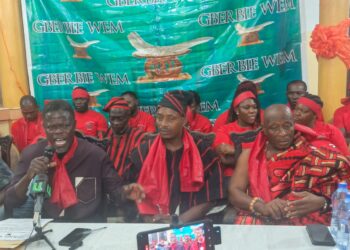
Brigadier General Zibrim Bawah Ayorrogo, Deputy Commandant of the Kofi Annan International Peacekeeping Training Centre (KAIPTC), has called for stronger investment in building the leadership and conflict-resolution skills of Ghana’s traditional rulers, describing them as indispensable partners in sustaining peace and national cohesion.
He made the call at the opening of the 2025 Teshie Homowo School, a capacity-building programme designed to equip chiefs and traditional leaders with modern governance, mediation, and peacebuilding tools under the theme: “One People, One Culture, One Heritage: Building Capacities to Strengthen Traditional Leadership for Peace.”
Brig Gen Ayorrogo stressed that chiefs remain at the heart of Ghana’s social and cultural fabric, with an unmatched influence in resolving community disputes, promoting dialogue, and preventing violence.
“Our chiefs are not just custodians of culture—they are the first responders in local conflicts and peacekeepers at the grassroots,” he said. “Building their capacity is not a luxury; it is a necessity for a peaceful and harmonious Ghana.”
 He noted that empowering traditional rulers through training and dialogue would help address emerging threats such as land disputes, illegal mining, youth unemployment, farmer-herder conflicts, misinformation, and radicalization.
“When we build your capacity, we build the peace of our dear nation,” he told the participants. “A peaceful Ghana begins in our palaces, our communities, and most importantly, in our hearts.”
The two-day seminar, he added, would offer practical tools in negotiation, mediation, and community governance—skills that could prevent minor disputes from escalating into major conflicts.
Mr. Enoch Addo, Registrar of the Greater Accra Regional House of Chiefs, lauded KAIPTC for championing the initiative, describing it as a timely response to the challenges confronting the chieftaincy institution. He said conflicts and divisions within the institution often undermined the developmental role of chiefs.
“The chieftaincy institution remains critical to Ghana’s progress, but internal disputes have sometimes turned festivals—meant to unite our people—into moments of confrontation,” he lamented.
Mr. Addo revealed that the Ministry of Chieftaincy and Religious Affairs had pledged full support for the programme and expressed optimism that it could be expanded into a national training initiative for traditional leaders.
He encouraged participants to take the sessions seriously, emphasizing that the facilitators were experts in peacebuilding and conflict management.
“Listen, learn, and lead with wisdom,” he urged. “Our shared history and common destiny bind us together.”
Gbetsoolo Nii Ashitey Akomfra III, Teshie Mantse and President of the Teshie Traditional Council, reiterated the importance of traditional authority in preserving peace, culture, and unity.
“The chieftaincy institution remains the bridge between culture and governance,” he said. “We must strengthen this bridge through learning, collaboration, and shared purpose.”
He pledged the Teshie Traditional Council’s commitment to peacebuilding and cultural preservation, noting that traditional leaders must work hand-in-hand with state institutions and civil society to promote social harmony and community development.
The Teshie Homowo School, now in its second year, continues to serve as a key platform for knowledge exchange, fostering leadership excellence and promoting traditional governance as a cornerstone of sustainable peace in Ghana.