
















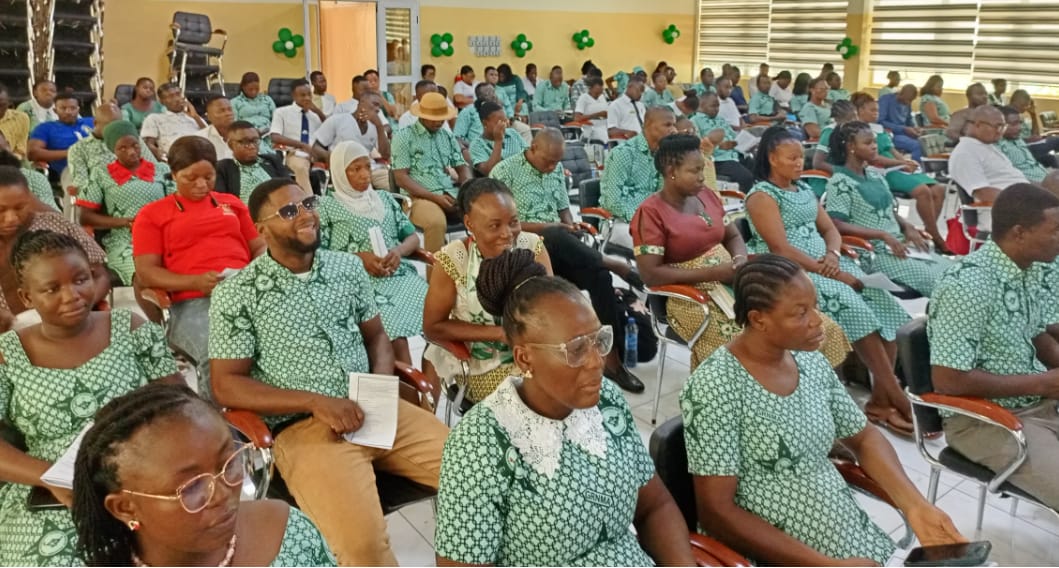
Nurses and midwives in the Upper East Region have renewed calls for improved working conditions, enhanced healthcare infrastructure, and greater professional development opportunities, warning that persistent challenges continue to affect healthcare delivery across the region.
The concerns were raised during a regional event marking International Nurses Day, where healthcare professionals highlighted the urgent need for investment in the nursing workforce to meet growing public demand for quality healthcare services.
Speaking as keynote speaker, Dr. Michael Wombeogo, Dean of the Faculty of Health and Allied Sciences at Regentropfen University College in the Bongo District, said nurses and midwives remain central to Ghana’s healthcare system but continue to work under difficult conditions.
According to him, despite recent staff postings, the Upper East Region still faces shortages of healthcare personnel, placing considerable pressure on existing workers and creating gaps in essential services, particularly maternal, newborn, and child healthcare.
Dr. Wombeogo identified inadequate infrastructure as one of the major obstacles to effective healthcare delivery. He called for investments in modern maternity wards, reliable electricity, clean water systems, and improved sanitation facilities to support healthcare professionals and improve patient outcomes.
He noted that nurses and midwives are seeking practical interventions, including fair remuneration, better incentives, specialized training opportunities, leadership development, and safer workplaces.
The challenges are particularly acute in conflict-affected and underserved communities such as Bawku and Nalerigu, where health workers often operate under difficult circumstances while dealing with staff shortages, heavy workloads, burnout, and security concerns.
Despite these challenges, Dr. Wombeogo commended nurses and midwives for their dedication and resilience, describing them as trusted frontline professionals who provide critical healthcare services to vulnerable populations.
He also advocated greater representation of women in health sector leadership, noting that although women make up the majority of the nursing workforce, they remain underrepresented in key decision-making positions.
To improve healthcare outcomes, he called for expanded specialized training programmes in areas such as neonatal care, management of postpartum haemorrhage, and pregnancy-induced hypertension, which remain significant contributors to maternal and infant mortality.
The event, held under the theme “Our Nurses, Our Future: Empowered Nurses Save Lives,” also heard calls for stronger public recognition of the role nurses and midwives play in national development.
In remarks delivered on his behalf, the Upper East Regional Director of the Ghana Health Service, Dr. Braimah Baba Abubakari, urged nurses to continue investing in professional growth, clinical excellence, and ethical practice.
He noted that the expansion of healthcare access across the country has raised public expectations and placed greater responsibility on healthcare professionals to deliver high-quality services.
Dr. Abubakari stressed that continuous learning and adherence to professional standards would be essential as the healthcare sector evolves to meet the needs of a growing population.
The event brought together nurses, midwives, health administrators, educators, and other stakeholders who collectively called for stronger support systems to empower healthcare workers and improve health outcomes across the Upper East Region.






