
















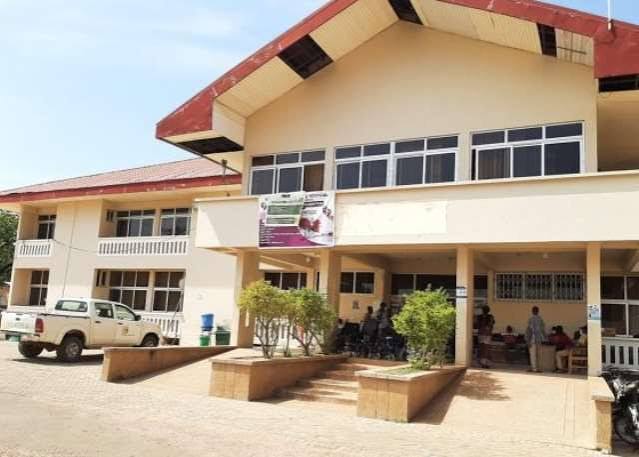
Health authorities in the Upper East Region are urging district managers to speed up the distribution of equipment and logistics under the Free Primary Health Care (FPHC) programme to ensure resources reach frontline facilities and translate into improved services.
Regional Director of Health Services, Dr Braimah Baba Abubakari, said the region’s early preparations for the programme had given it an advantage in implementation, but stressed that the benefits would only be realised if equipment was promptly deployed to facilities.
Speaking at a two-day Trainer of Trainers (ToT) programme in Bolgatanga, Dr Abubakari said the Upper East Region had positioned itself as one of the leading regions in the rollout of FPHC and had begun attracting interest from other regions seeking practical lessons.
“The Upper East Region has become a base that is suddenly ahead in the implementation of Free Primary Health Care,” he said.
He attributed the region’s progress to early preparations, including the training of trainers and the acquisition of equipment and logistics designed to support outreach activities at the district and facility levels.
According to him, the region was among the first to establish its own ToT programme and put in place logistics, including dedicated visit bags, to facilitate implementation across districts.
“We feel that we are miles ahead. Now the Ministry and the Service are asking us how we are doing it in the Upper East Region, so they could follow,” he said.
Dr Abubakari said the region’s experience had increasingly featured in national training programmes, with facilitators from the Upper East contributing practical inputs that were subsequently incorporated into training materials.
He said participants and facilitators at a recent training repeatedly referred to experiences from the region, while inputs from Upper East facilitators were used to improve training notes.
“The facilitators here made a lot of inputs that make sense to them, to enable them to go and revise their notes,” he said.
Despite the progress, Dr Abubakari identified delays in the distribution of equipment as an area requiring immediate attention.
He directed District Health Directorates to ensure that equipment received under the FPHC programme was promptly distributed to health facilities instead of being left in district medical stores.
He explained that district health managers had been given the flexibility to determine where specific equipment should be deployed because they were more familiar with the needs and service gaps of individual facilities.
Such a district-led approach, he said, would ensure that equipment was directed to facilities where it could have the greatest impact, particularly in underserved communities.
Dr Abubakari also expressed concern that some home visit bags remained at District Health Directorates instead of being made available to frontline health facilities.
“They are supposed to be at the facility level for distribution,” he said.
He therefore urged the districts to complete the distribution of the bags and other logistics to enable health workers to effectively carry out community-level activities under the programme.
The Regional Director said addressing equipment gaps in deprived areas would remain a priority as implementation progressed, noting that resources needed to reach the facilities and communities for which they were intended.
The Upper East Region’s experience is increasingly being viewed as a practical reference point as health authorities across Ghana prepare to expand the FPHC programme, with its emphasis on early preparation, frontline deployment and district-level decision-making providing lessons for the wider rollout.






