
















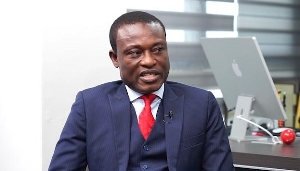
Ghana’s Special Prosecutor, Kissi Agyebeng, has called for bold structural reforms to solidify the fight against corruption and ensure lasting institutional independence. Speaking at the UPSA Law School an
One of his primary proposals was the formal entrenchment of the Office of the Special Prosecutor (OSP) in the national constitution. He argued that without constitutional backing, the OSP risks being undermined or dissolved based on political convenience.
“We must write the Office of the Special Prosecutor into the constitution and board it up firmly. Do not dwell on me. Leave me out of the equation. My tenure will end, and I will leave, but the institution must endure,” he stated.
Agyebeng also urged the enactment of a comprehensive Corrupt Practices Act to simplify and clarify corruption-related offenses, ensuring a more effective legal process. He criticized the current legal framework, calling it overly complex and prone to misinterpretation.
“The present formulation under section 79 of Act 959 is unhelpful and circuitous. Our legal texts should clearly state what we mean rather than creating ambiguity,” he asserted.
To ensure swift justice in corruption-related cases, the Special Prosecutor proposed the establishment of dedicated anti-corruption courts with judges specially trained in corruption-related matters.
“We must set up specialized anti-corruption courts manned by judges trained in the field to swiftly and efficiently deal with corruption cases,” he noted.
He emphasized that prolonged trials weaken public trust in the judicial process and create loopholes for corruption suspects to escape accountability.
Agyebeng also raised concerns about unexplained wealth among public officials and private individuals, proposing lifestyle audits as a tool to enhance transparency.
He further called for greater scrutiny of political party financing, arguing that the monetization of public elections fuels corruption and weakens governance structures.
“We must forcefully address unexplained wealth among public officers and private persons with rigorous lifestyle auditing. At the same time, we must confront the opacity surrounding political party financing,” he said.
Looking beyond legal reforms, Agyebeng advocated for the inclusion of anti-corruption studies in Ghana’s school curriculum, starting from the basic education level. He believes early education on integrity and ethical governance will foster a new generation committed to fighting corruption.
“All I am saying is this – we must channel our anti-corruption laws as a construct for national development,” he concluded.
While reaffirming his commitment to serving his full tenure, Agyebeng made it clear that the fight against corruption must go beyond his tenure and individual leadership. He stressed the need for sustainable legal, judicial, and educational measures to institutionalize Ghana’s anti-corruption efforts.
His proposals have sparked discussions on how Ghana can move from a reactive to a proactive approach in combating corruption, ensuring accountability and transparency for future generations.






