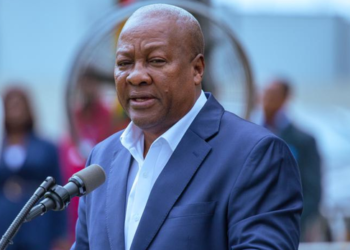
As the Ministry of Education signals a shift in the way Ghana assesses teacher competence, education advocacy groups are urging caution to avoid compromising quality in the classroom.
Executive Director of Africa Education Watch, Kofi Asare, has strongly defended the Teacher Licensure Examination, arguing that despite ongoing discussions about reform, the exam remains a critical tool for maintaining professional standards in the teaching profession.
His remarks come in response to a directive issued by Education Minister Haruna Iddrisu on Tuesday, July 15, directing the National Teaching Council (NTC) to conduct a final round of the current licensure exam framework by August 30, 2025. The move is part of a broader policy transition aimed at redefining how teacher qualifications are evaluated in Ghana.
Speaking on The Point of View on Channel One TV the following day, Mr. Asare clarified that while changes are expected, the exam itself has not been abolished and remains essential to quality assurance in the education sector.
“The Teacher Licensure Exam is not being scrapped—it still serves a vital purpose,” Asare stated. “If we eliminate this independent assessment, we risk opening the door to underqualified individuals entering our classrooms.”
Drawing from personal experience in reviewing candidate scripts, Asare warned that removing the exam could lead to a significant decline in classroom competence, especially in key skills such as English proficiency.
“The fact that the exam is conducted by an independent body and not by the faculties themselves ensures credibility. That’s something we must preserve even as we explore reform,” he added.
The teacher licensure exam, introduced to professionalize teaching and align with global standards, has come under criticism from some teacher trainees and education stakeholders who say it is rigid and sometimes unfair. The latest developments have reignited debate about the structure, effectiveness, and future of the assessment model.
While reform advocates are calling for a more holistic and continuous evaluation system, groups like Africa Education Watch caution that any changes must be carefully implemented to avoid lowering the bar for entry into the teaching profession.
As the NTC prepares to administer what may be the last sitting under the current model, all eyes remain on the Ministry of Education’s next steps in shaping the future of teacher qualification in Ghana.