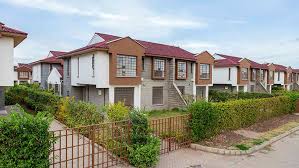
The Government has intensified efforts to tackle Ghana’s housing deficit, with a renewed focus on financing reforms, private sector partnerships and macroeconomic stability to make home ownership more attainable for citizens.
Speaking at the opening of the National Home Ownership Fair 2026 in Accra, Nana Oye Bampoe Addo, Deputy Chief of Staff, reiterated the government’s commitment to expanding access to affordable housing across the country.
She noted that housing remained a critical national priority, stressing that it was not only a basic social need but also an economic asset that supported health, education, job creation and national growth.
The event, held under the theme “Building Ghana, One Home at a Time,” comes at a time when Ghana faces an estimated housing deficit of more than 1.8 million units as of 2025, largely driven by rapid urbanisation, population growth and limited access to housing finance.
According to Madam Bampoe Addo, the government is working to complete key housing projects, including the Saglemi Affordable Housing Project, Ho Oxygen City and the District Housing Programme, to provide affordable homes for civil servants, professionals and ordinary workers.
She highlighted the importance of the National Home Ownership Fund in addressing barriers to home ownership, particularly by improving access to mortgages and encouraging greater private sector participation in housing development.
Madam Bampoe Addo also underscored the need for collaboration among developers, financial institutions, traditional authorities and local governments to scale up housing delivery nationwide. She added that ongoing legislative reforms, including the modernised Rent Control Bill (Ghana), would help protect tenants while bringing more structure to the housing sector.
Meanwhile, Thomas Nyarko Ampem, Deputy Minister of Finance, emphasised that addressing the housing crisis required broader economic reforms and stable macroeconomic conditions.
He explained that high housing costs, long commuting times and poor living conditions affected productivity, health and education, making the housing deficit both a social and economic challenge.
Mr Ampem cited figures from the Ghana Statistical Service showing that the construction sector grew by 5.5 per cent year-on-year in the third quarter of 2025, highlighting its potential to create jobs and drive economic expansion when adequately supported.
To address the housing gap, he outlined three key priorities for the Ministry of Finance: maintaining macroeconomic stability to lower borrowing costs, mobilising long-term financing for housing development, and reducing non-construction costs such as land acquisition, permits and infrastructure.
He added that government was strengthening partnerships with banks, pension funds and development finance institutions to mobilise long-term capital while implementing reforms to improve land title security and streamline regulatory processes.
Both officials described the National Home Ownership Fair as an important platform for developers, financiers, regulators and prospective homeowners to collaborate on practical solutions aimed at making home ownership achievable for more Ghanaians.