
















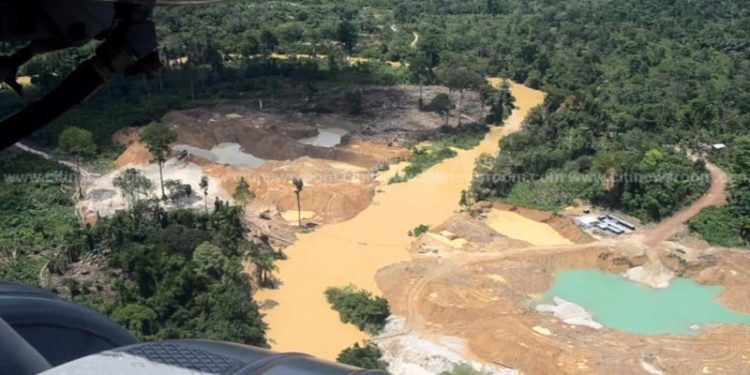
The Environmental Protection Agency (EPA) has raised alarm over what it describes as the increasing boldness and dangerous nature of illegal mining operators, warning that enforcement officers are facing growing risks during anti-galamsey operations.
According to the EPA’s Tarkwa Regional Director, Derick Ashia Logo, some illegal mining sites are now heavily protected, with operators allegedly possessing weapons and resisting attempts by authorities to halt their activities.
He said the situation has made monitoring and enforcement missions increasingly hazardous, with officers sometimes risking their lives when entering illegal mining zones.
Mr. Logo noted that despite repeated engagements and enforcement actions, many illegal miners remain unwilling to abandon their operations, which continue to threaten forests, rivers, and other critical natural resources.
In response, the EPA is calling for stronger involvement from traditional authorities. The agency believes chiefs can play a crucial role in curbing the menace by using their influence and authority to discourage illegal mining activities within their communities.
The EPA director suggested that traditional leaders could draw on customary laws, cultural values, and local belief systems to reinforce environmental protection efforts and promote respect for water bodies and forest reserves.
He also called for greater government support for community-led environmental protection initiatives, arguing that local participation remains essential in the fight against illegal mining.
Additionally, Mr. Logo proposed stricter accountability measures for traditional leaders who fail to safeguard natural resources under their jurisdiction. He argued that holding chiefs responsible for environmental destruction in their areas could strengthen efforts to preserve forests and water bodies.
The EPA maintains that illegal mining continues to pose a major environmental and security challenge, requiring a coordinated response involving government agencies, traditional authorities, and local communities.






