
















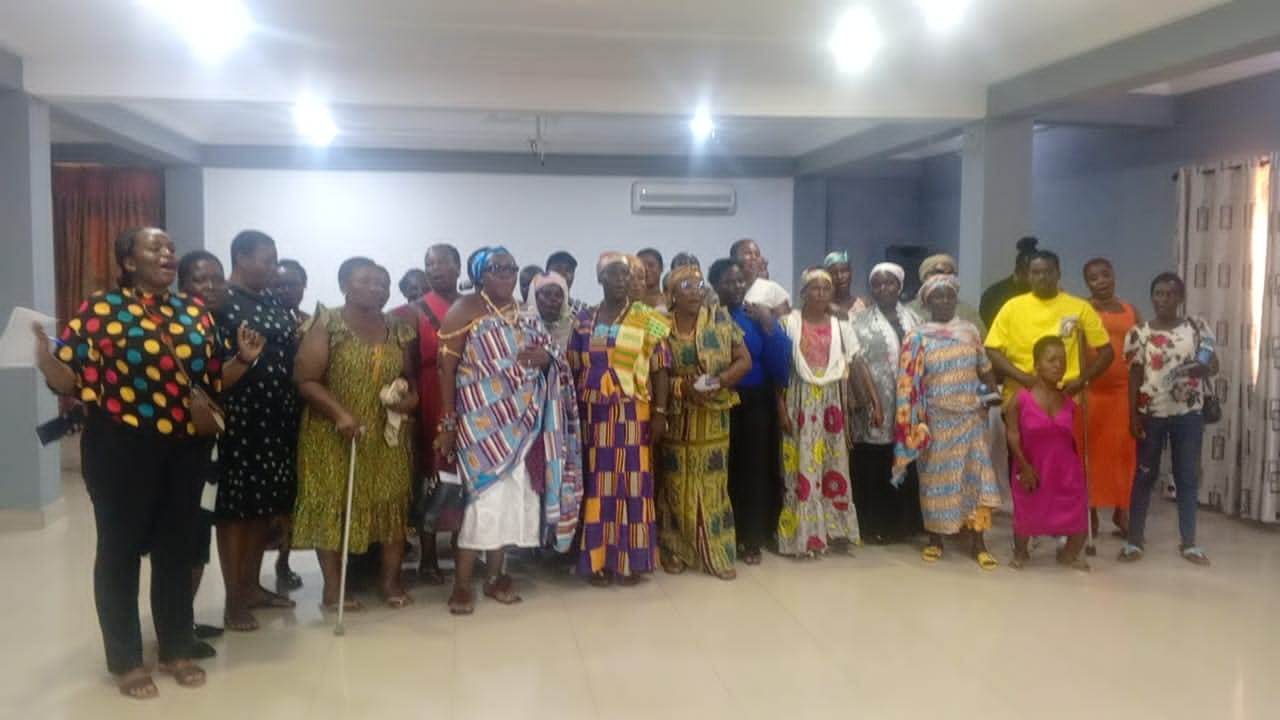
A women’s advocacy group based in Ghana’s Central Region has issued a passionate appeal to President John Dramani Mahama and the Council of State to preserve the integrity of national institutions and safeguard the progress made in women’s leadership by halting any efforts to remove Chief Justice Gertrude Araba Esaaba Sackey Torkornoo.
At a press conference on Monday, spokesperson Miss Vivian Gassor emphasized that Ghana’s hard-won milestones in gender representation, particularly in high public offices, should not be undermined by politically motivated actions cloaked in legality.
“We are not against due process,” she clarified, “but we caution against using constitutional procedures to serve narrow interests at the expense of national cohesion and gender equity.”
Miss Gassor highlighted the historic significance of Justice Torkornoo’s appointment, noting it as a beacon of hope for young girls and women across the country striving to break through leadership barriers.
“We cannot afford to reverse this momentum. Her removal under questionable circumstances could have a chilling effect on women’s advancement and national unity,” she warned.
The advocacy group called on all women’s organizations and citizens who believe in inclusive governance to stand firm against what they termed a “creeping cloud of darkness”—a veiled reference to recent attempts they believe could destabilize Ghana’s democratic gains.
Their statement also urged the Council of State, described as a “unique class of elders with lived wisdom and historical perspective,” to exercise discretion and objectivity in handling the petitions forwarded by the presidency.
Meanwhile, Chief Justice Torkornoo has submitted her formal response to the three petitions filed earlier this year calling for her removal. The presidency confirmed the petitions had been duly referred to the Council of State under the provisions of Article 146 of the 1992 Constitution, which governs the procedures for removing justices of the superior courts and similar officeholders.
While the legal process unfolds, the group cautioned that Ghana’s image as a champion of democracy and gender parity could suffer if partisan actions are allowed to override fairness and national interest.
“This is more than a legal issue; it is about protecting the very soul of our democracy, and the progress we have made toward equality,” Miss Gassor concluded.






