The Ghana Centre for Democratic Development (CDD-Ghana) has launched a new international desk dedicated to addressing the mounting geopolitical challenges facing West and Central Africa.
The new initiative aims to scrutinize the growing presence and influence of foreign powers across the continent, while empowering African nations to respond with unified, strategic, and self-determined policies.
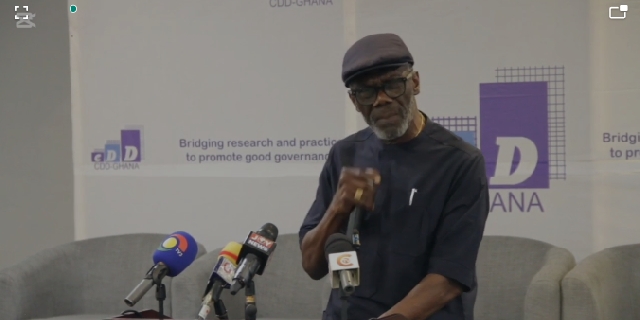
At the inauguration event, Dr. Kojo Pumpuni Asante, CDD-Ghana’s Director of Policy Engagement and Partnerships, emphasized the critical need for Africa to become a proactive actor in shaping its geopolitical destiny.
“As the world’s power dynamics shift, Africa must shift with it — not as an observer or passive recipient of influence, but as a continent with its own vision and strategy,” Dr. Asante said. “This international desk is our effort to create space for that reflection, dialogue, and planning.”
A Call for Unity and Strategic Clarity
Adding his voice to the conversation, Ambassador Larry Gbevlo-Lartey, Ghana’s Special Envoy to the Alliance of Sahel States, urged West African countries to rise above fragmented national responses and form a collective front in global diplomacy and security discourse.
“We cannot continue to allow foreign interests to define our priorities,” he warned. “It is time for Africa to act with clarity and cohesion — to declare and defend our interests, not just regionally, but globally.”
Ambassador Gbevlo-Lartey cautioned against being drawn into geopolitical rivalries that do not serve Africa’s long-term development and security goals, underscoring the urgency of redefining foreign partnerships on African terms.
Shaping Africa’s Global Future
The international desk’s creation reflects CDD-Ghana’s broader mission to strengthen democratic governance and policy-making through evidence-based research and strategic engagement. This new arm will focus on providing analysis, convening thought leaders, and influencing policy to ensure Africa is not sidelined in the evolving global order.
With increasing foreign involvement in African infrastructure, military cooperation, and political processes, the desk will serve as a watchdog and a platform for envisioning a future where African nations are equal players — not proxies — in global affairs.
“This is about ownership of our narrative, our politics, and our development. Africa must lead on Africa,” Dr. Asante concluded.