
















…Industry Experts Warn of Dire Consequences for Food Security and Economic Growth
The 2025 national budget has sparked controversy in Ghana’s agricultural sector, with stakeholders expressing deep concerns over what they describe as a drastic decline in government support for agriculture.
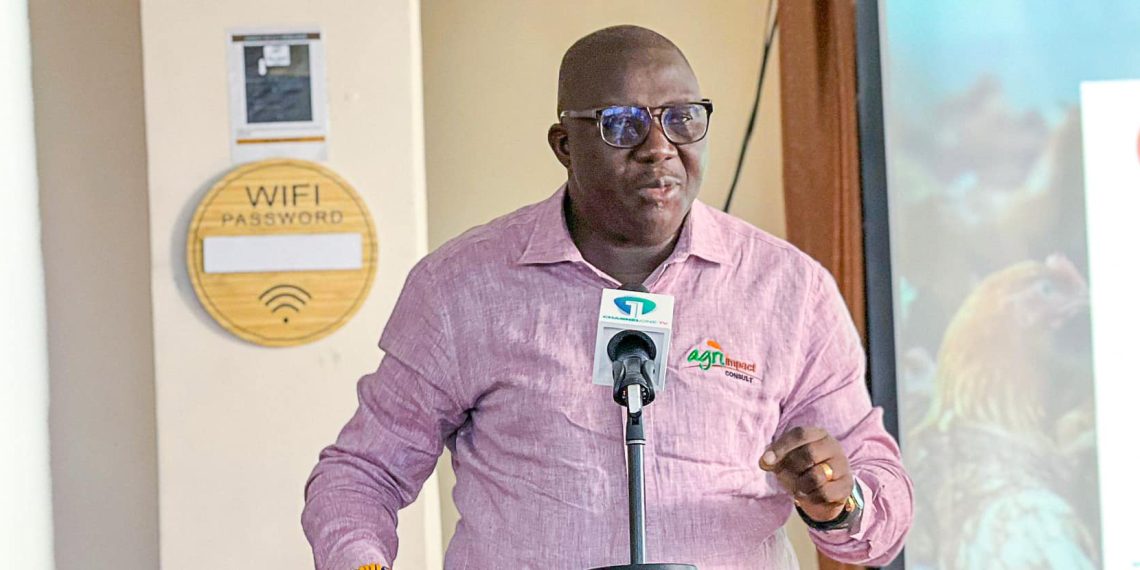
At the 2025 Budget Digest organized by PwC in Accra, the Chief Executive Officer of Agri-Impact Limited, Mr. Daniel Fahene Acquaye, criticized the government’s budgetary allocation to agriculture, arguing that the sector has been marginalized despite its critical role in economic transformation.
The numbers paint a stark picture: Out of the total GH¢279 billion national budget, only GH¢1.5 billion—a mere 0.54%—has been allocated to agriculture. This is a steep decline from the 2.2% allocation in 2024, signaling what many industry players see as a lack of commitment to agricultural development.
“If we see a decline in the government’s own budget allocation to agriculture—not donor funds—then we are definitely going to face challenges,” Mr. Acquaye warned.
While the government has announced a GH¢13.8 billion ‘Big Push Initiative’ to stimulate economic growth, Mr. Acquaye questioned why agriculture was not a focal point in the initiative.
He called for a dedicated ‘Big Push for Agriculture’, urging the government to channel significant funds into irrigation, post-harvest infrastructure, and large-scale agricultural development.
A key concern raised was the lack of a dedicated financial mechanism for the agricultural sector. While education has GETFund and cocoa has COCOBOD, there is no equivalent sector-specific fund for agriculture, leaving major gaps in investment.
Institutions like the Ghana Exim Bank, GIRSAL, and the Development Bank of Ghana offer agribusiness support, but they do not fund large-scale infrastructure such as irrigation, storage facilities, and rural road networks—key drivers of agricultural productivity.
The impact of climate change on agriculture was another major concern. Farmers in northern Ghana, who rely on a single production season, face increasing risks due to erratic rainfall patterns.
Mr. Acquaye revealed that delayed rains in 2023 led to crop failures exceeding 90% in some areas, leaving farmers unable to replant until the following year. Without major investments in irrigation and climate resilience, Ghana’s food security and rural economies remain vulnerable.
Beyond infrastructure, Mr. Acquaye stressed the need for policies that make agriculture attractive to young people. Ghana has introduced initiatives such as free tuition for first-year tertiary students, but there is no corresponding investment in career opportunities for skilled agricultural graduates.
With agriculture contributing significantly to Ghana’s GDP and employing millions of people, stakeholders argue that cutting funding to the sector is a step in the wrong direction.
Mr. Acquaye urged the government to reassess its budget priorities, emphasizing that without investment in agricultural infrastructure, climate resilience, and youth engagement, Ghana’s economic transformation will remain incomplete.
The question remains: Can Ghana achieve sustainable development while sidelining agriculture?






