Ghanaian households and businesses could soon face a steep rise in electricity bills as key players in the energy sector lobby the Public Utilities Regulatory Commission (PURC) for sharp tariff adjustments.
The Volta River Authority (VRA), the country’s main power producer, is seeking a 59 percent increase in its Bulk Generation Charge (BGC)—from 45.0892 pesewas per kilowatt-hour to 71.8862 pesewas. Officials argue that without this rise, the Authority will struggle to maintain reliable supply and meet its financial obligations.
But VRA is not alone. The Electricity Company of Ghana (ECG) and other distribution utilities have also submitted proposals that could significantly raise end-user tariffs. ECG is demanding a 224 percent jump in its Distribution Service Charge (DSC1) over the 2025–2029 tariff window, from 19.0875 pesewas/kWh to an average of 61.8028 pesewas. The company says the increase is vital to cover its projected GHS 9.1 billion annual revenue requirement, which includes higher operational costs, staff expenses, and debt obligations.
In the north, the Northern Electricity Distribution Company (NEDCo) is requesting 92.7333 pesewas/kWh, while the Enclave Power Company Limited (EPCL) has tabled the highest proposal at 147.1775 pesewas/kWh.
The proposals, currently under review at a PURC public hearing, have triggered intense debate over affordability and the future of Ghana’s energy sector. Analysts warn that if the increases are approved, businesses—already battling inflation, exchange rate volatility, and high borrowing costs—could face additional pressure, potentially leading to higher consumer prices and job losses.
Civil society groups are also raising red flags, urging PURC to weigh the social impact before granting approvals. “The ordinary Ghanaian is already stretched by the cost of living. Any further tariff hikes could push more families into energy poverty,” one advocacy group argued.
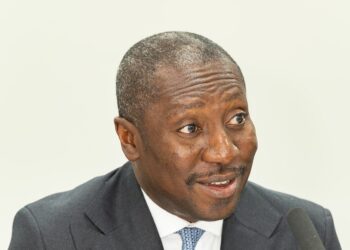
Still, utilities insist that the hikes are unavoidable if Ghana is to achieve financial sustainability in its power sector. VRA’s Senior Economic Analyst, Evans Somuah Mensah, told the hearing that the Authority is seeking compensation of $30.49 million annually for Akosombo’s power generation and support services, warning that current tariffs leave huge cost gaps.
The PURC is expected to issue its ruling in the coming weeks, a decision that could reshape household budgets and business competitiveness across the country.