
















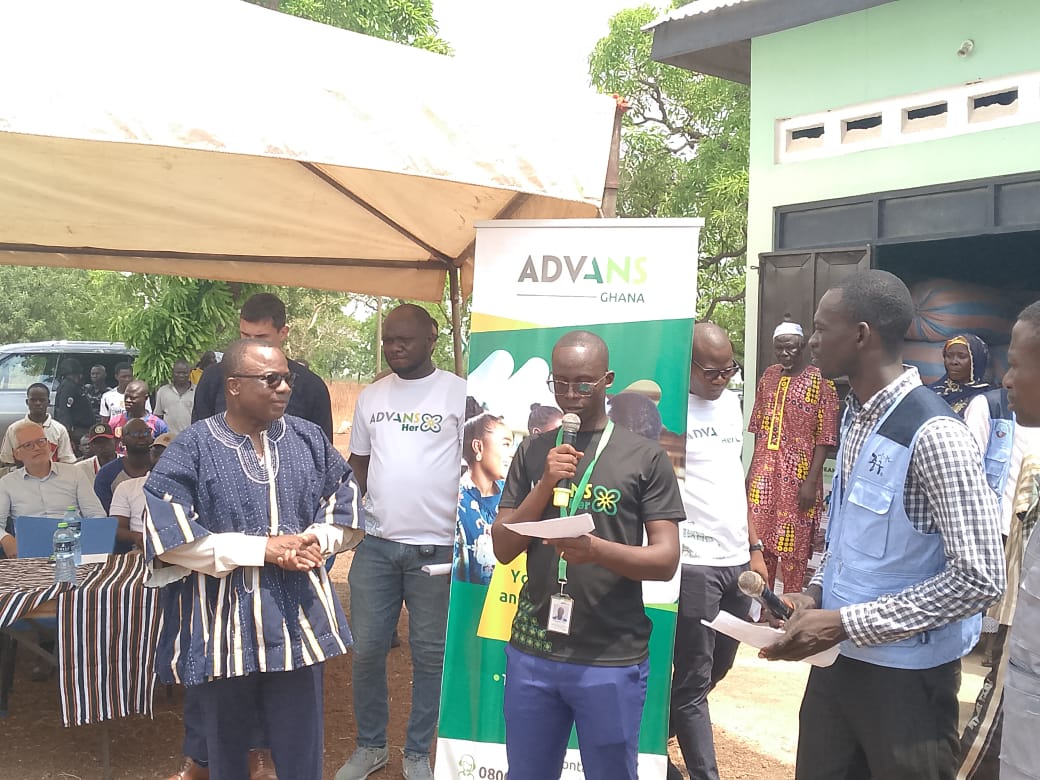
In a bold show of commitment to women-led economic transformation, the French Ambassador to Ghana, Mr. Jules-Armand Aniambossou, has reaffirmed France’s dedication to empowering women entrepreneurs across the country—highlighting a successful shea processing initiative that is changing lives in the Northern Region.
Speaking during a working visit to a shea processing centre at Tugu, a farming community in the Tamale Metropolis, Mr. Aniambossou described the support as part of President Emmanuel Macron’s vision for a new kind of partnership with Africa—one built on sustainable development and shared prosperity.
The centre, established through a collaborative initiative by Advans Savings and Loans—a French-owned financial institution—and development partners including the Mastercard Foundation and the Global Shea Alliance, has become a beacon of progress for rural women. Over the past three years, the programme has directly impacted 8,000 women, offering job opportunities, skills training, and financial empowerment in the shea industry.
“Ghana is full of opportunities, and France is here as a reliable partner to walk with you on this path of inclusive and sustainable development,” Mr. Aniambossou said.
Advans CEO, Mr. Guillaume Valence, disclosed that in 2024 alone, GH¢4 million in loans had been disbursed to 46 women’s cooperatives, strengthening their businesses and encouraging expansion into other value chains. He praised the women’s strong repayment culture, which has motivated the company to scale up support.
The real impact of the initiative, however, is best captured through the stories of its beneficiaries. Hajia Latifa Osman, one of the many women empowered by the project, shared how the programme has helped her fund her children’s education—one of whom has graduated in Agricultural Science and another studying Architecture.
“We’re not just making shea butter—we’re shaping our children’s futures,” she said with pride.
Leader of the Tugu Cooperative Unit, Madam Fuseina Andani, echoed these sentiments and appealed for more logistical support such as tricycles, a warehouse, and an upgraded processing centre to enhance productivity and efficiency.
As Ghana moves forward in its development journey, partnerships like these are proving that empowering women isn’t just good policy—it’s smart economics.






