
















Ghanaian vaccine and pharmaceutical manufacturers are set to gain access to a continental market of more than 1.4 billion people following the country’s decision to join the African Pooled Procurement Mechanism (APPM).
Ghana signed a Memorandum of Understanding (MoU) with the Africa Centres for Disease Control and Prevention (Africa CDC) on August 21, 2026, in Accra, creating a structured pathway for locally manufactured vaccines, pharmaceuticals and medical products to reach markets across Africa.
The agreement gives practical effect to President John Dramani Mahama’s directive to prioritise locally produced vaccines and pharmaceuticals in public procurement while supporting Ghanaian manufacturers to expand beyond the relatively small domestic market.
The MoU was signed on behalf of the Government by the Minister of Health, Mr Kwabena Mintah Akandoh, and Africa CDC Director-General, Dr Jean Kaseya.
Mr Akandoh said Ghana’s participation in the APPM fulfilled a commitment made by President Mahama at the Ghana Vaccines Manufacturing Investment Forum in August 2025.
He said government was pursuing reforms to give locally produced health products greater priority in public procurement while also helping Ghanaian manufacturers secure access to regional markets through the continental procurement mechanism.
The Health Minister said the APPM would be complemented by efforts to establish an Advance Purchase Commitment system aimed at reducing investment risks for companies seeking to establish or expand vaccine and pharmaceutical manufacturing capacity in Ghana.
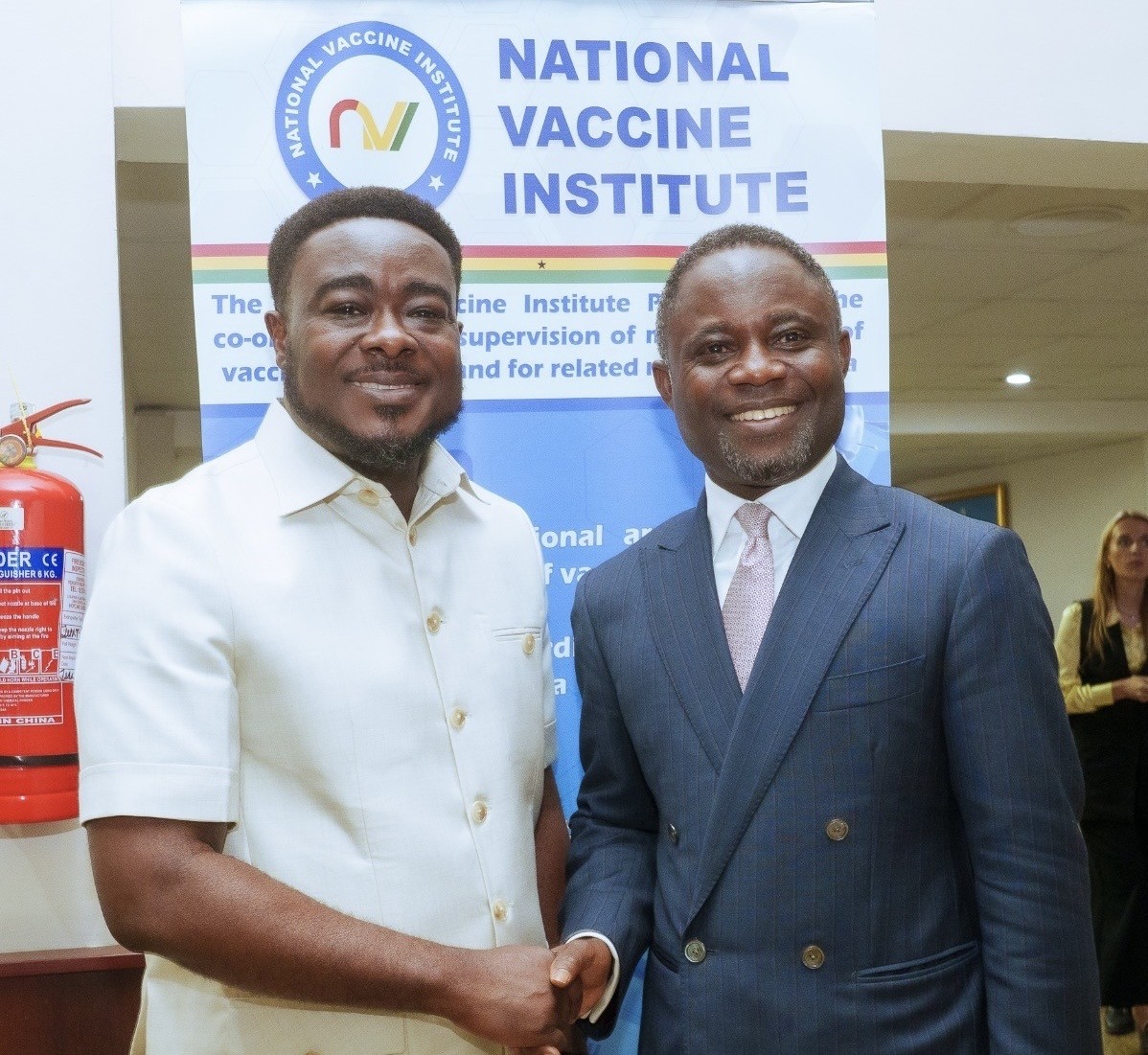
Chief Executive Officer of the National Vaccine Institute (NVI), Dr Sodzi Sodzi-Tettey, said the APPM would provide manufacturers with more predictable demand and a structured route into African markets.
He said the mechanism could help overcome one of the major challenges facing local pharmaceutical production — the limited size of Ghana’s domestic market.
According to him, expanding the potential customer base from about 33 million people in Ghana to more than 1.4 billion Africans could significantly improve the prospects for sustainable investment in local manufacturing.
“This is a defining moment for Ghana and the Institute,” Dr Sodzi-Tettey said, stressing that the arrangement could strengthen Ghana’s ambition to become a regional centre for vaccine and pharmaceutical production.
He said products already manufactured locally, including Tetanus Diphtheria vaccines, Anti-tetanus Serum and Snake Venom anti-Serum, could be positioned to serve a much wider continental market.
Beyond expanding market opportunities, Dr Sodzi-Tettey said pooled procurement would increase Africa’s collective purchasing power, improve access to affordable and quality-assured health products and strengthen intra-African trade.
He added that Ghana’s participation would not weaken domestic regulatory controls, with all products procured through the APPM remaining subject to the oversight of the Food and Drugs Authority (FDA).
The FDA will continue to be responsible for areas including marketing authorisation, import control, batch release and post-market surveillance.
Dr Sodzi-Tettey said the FDA’s status as a World Health Organisation (WHO) Maturity Level Three regulator for medicines provided an important quality and safety assurance for products entering the procurement system.
The next phase of the initiative will focus on translating the agreement into actual commercial opportunities for Ghanaian manufacturers.
A Regional Meeting on the APPM is scheduled to take place in Accra in November 2026, bringing together policymakers, regulators, manufacturers and procurement agencies to determine the supply catalogue, technical specifications and implementation arrangements.
Dr Sodzi-Tettey said the NVI would work closely with Africa CDC to ensure that Ghana’s participation moved beyond the signing of the agreement and resulted in tangible opportunities for local manufacturers.
The development is also expected to support the planned Ghana Pharmaceutical Hub by providing emerging manufacturers with access to a wider and potentially more predictable market.
The NVI, established under the National Vaccine Institute Act, 2023 (Act 1056), is mandated to coordinate, supervise and facilitate local manufacturing of vaccines and sera in Ghana.
The government and the NVI see the APPM as an important step towards reducing Ghana’s reliance on imported health products while building a stronger domestic manufacturing base capable of supplying markets across Africa.






