
















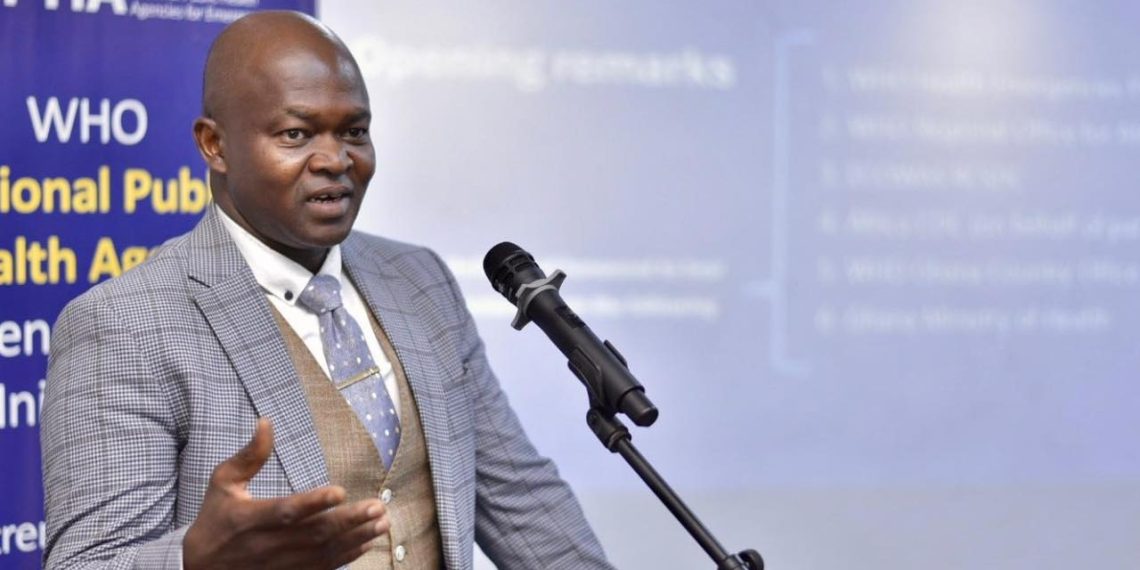
The Director-General of the Ghana Health Service (GHS), Professor Samuel Kaba Akoriyea, has urged health authorities and stakeholders in the Upper East Region to remain vigilant in the face of ongoing health concerns, particularly the threat of Cerebrospinal Meningitis (CSM), which has been a recurring issue in northern Ghana.
During a working visit to the Upper East Regional Coordinating Council, Professor Akoriyea emphasized the need for enhanced surveillance and public awareness campaigns, particularly regarding the symptoms and prevention of CSM, following recent cases in the region. While the region has not yet declared an official outbreak, the Director-General noted that two deaths have been recorded out of 31 suspected cases, underlining the importance of swift and coordinated action.
“Though the situation seems under control, complacency is not an option. Our efforts must be intensified, especially in the Upper East and Upper West Regions, to prevent further spread,” Professor Akoriyea stated.
The call comes after a significant loss of life in the Upper West Region earlier this year, where 16 people died from 173 suspected cases of CSM. The Director-General highlighted the challenges of early detection, expressing concern over the public’s hesitation to seek medical care when symptoms appear. In response, the GHS has procured sufficient vaccines to quickly respond to any outbreaks.
Professor Akoriyea also underscored the need for stronger border surveillance, especially given the proximity to Sahelian countries, which poses a continuous risk of cross-border infections.
In addition to the public health threat, Professor Akoriyea raised alarm over the critical shortage of health professionals in the region, a challenge exacerbated by insecurity in areas like Bawku. He noted that the persistent conflict in these regions has deterred many healthcare workers from accepting postings, further straining the already overburdened healthcare system.
“Without peace, health outcomes will continue to suffer. Safety concerns directly affect the ability of health professionals to work effectively, particularly in conflict-prone areas like Bawku,” he said.
The Director-General also expressed frustration with external interference in staff postings and transfers, calling for more local support in ensuring a fair distribution of healthcare workers across all districts in the region.
In response, Al-Hassan Ibrahim Abdul-Kadir, Acting Regional Coordinating Director, assured Professor Akoriyea that the Regional Minister would address the issues raised. He also indicated that efforts were underway to collaborate with the Ghana Medical Association to improve security and working conditions for health professionals in the region.
Professor Akoriyea’s visit highlights the ongoing health challenges in northern Ghana and the urgent need for enhanced collaboration between local and national authorities to address the region’s healthcare needs.






