
















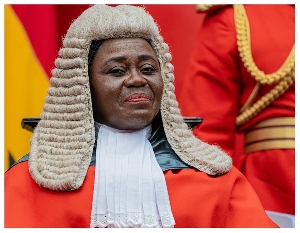
Former Director of the Ghana School of Law, Kwaku Ansa-Asare, has strongly criticised suspended Chief Justice Gertrude Torkornoo’s decision to seek Supreme Court intervention in an ongoing constitutional process concerning her potential removal from office.
Describing her legal challenge as “unconstitutional and troubling,” Ansa-Asare said the move undermines the integrity of Ghana’s constitutional order.
Justice Torkornoo, who was suspended by President John Dramani Mahama after three separate petitions were filed for her removal, is challenging the proceedings. She has petitioned the Supreme Court to restrain Justices Gabriel Scott Pwamang and Samuel Asiedu from participating in the inquiry, citing concerns over alleged private meetings they held with a lawyer involved in the case.
Additionally, she is seeking an interlocutory injunction to halt the work of the presidential committee set up under Article 146 of the Constitution.
But Ansa-Asare, speaking to Joy News on Wednesday, issued a stern rebuke of the legal manoeuvre.
“This is a very worrying unfolding story that the Chief Justice Gertrude Torkornoo will seek to stop the constitutional process. Any application to stop the process will itself be unconstitutional,” he said.
He defended President Mahama’s action, noting it adhered strictly to constitutional requirements and procedural timelines.
“The President has not violated any of the chronological stages in the process,” Ansa-Asare said. “Therefore, it will be a very difficult task for anyone to halt it.”
Casting doubt on the effectiveness of the Chief Justice’s legal strategy, he described the application as symbolic but ultimately toothless.
“What the lawyers are doing at the moment and what the Chief Justice herself has done is to bark but cannot bite; they are merely barking,” he added.
Justice Torkornoo’s legal team, led by former Attorney-General Godfred Yeboah Dame, maintains that the inquiry risks being compromised by bias — a claim Ansa-Asare appears to reject as lacking constitutional merit.
As the Supreme Court prepares to hear the matter, legal and political observers are closely watching what could become a landmark constitutional battle over judicial accountability and the limits of executive oversight.






