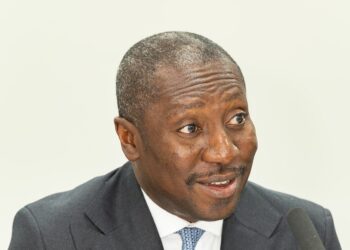
A high-stakes confrontation between the Chief Executive Officer of the Minerals Income Investment Fund (MIIF), Mrs. Justina Nelson, and sections of the media has escalated into both a police investigation and a GH₵10 million defamation lawsuit.
What began as critical publications over MIIF’s 2024 audited financial statements has now drawn in the office of the Christian Tetteh Yohuno, with the Special Operations Assistance (SOA) unit leading a probe into alleged defamatory reporting.
Mrs. Nelson petitioned the IGP, accusing certain editors and journalists of engaging in what she describes as a “persistent, false, malicious, and coordinated” campaign aimed at undermining her leadership and eroding public confidence in the state-owned fund. Central to the dispute are reports questioning her decision not to release the 2024 audited accounts and her request for a re-audit over alleged misstatements.
As part of the ongoing investigation, the Editor of The New Crusading Guide, Mr. Ernest Addo, has been questioned by the SOA unit, while broadcast journalist Wilberforce Asare was also interrogated at the Police CID headquarters for over two hours. Lawyers for Mr. Asare reportedly secured a copy of the petition prior to his appearance.
In her petition, Mrs. Nelson further alleged that Mr. Asare sought the publication of the financial statements and demanded either public credit to a former administration or payment of GH₵100,000 to halt further coverage—an allegation she characterised as extortionate and unethical. Mr. Asare has firmly denied the claims, describing them as entirely false.
Beyond the criminal complaint, Mrs. Nelson has initiated civil action against three editors—Ken Kuranchie, Wilberforce Asare and Daniel Bampoe—as well as six newspapers, including The Daily Searchlight, The Source, The Custodian, Ghanaian Publisher, The Daily Gist, and The New Crusading Guide. She is seeking GH₵10 million in damages, perpetual injunctions against further publications, and formal retractions and apologies.
In her statement of claim, she argued that publications dated November 26, 2025, falsely accused her of financial mismanagement and coercing the Auditor-General, portraying her as manipulating official records—claims she insists are baseless and malicious.
With police investigations underway and court proceedings set to unfold, the dispute has evolved into a significant test case at the intersection of media accountability, reputational protection, and public sector transparency.