
















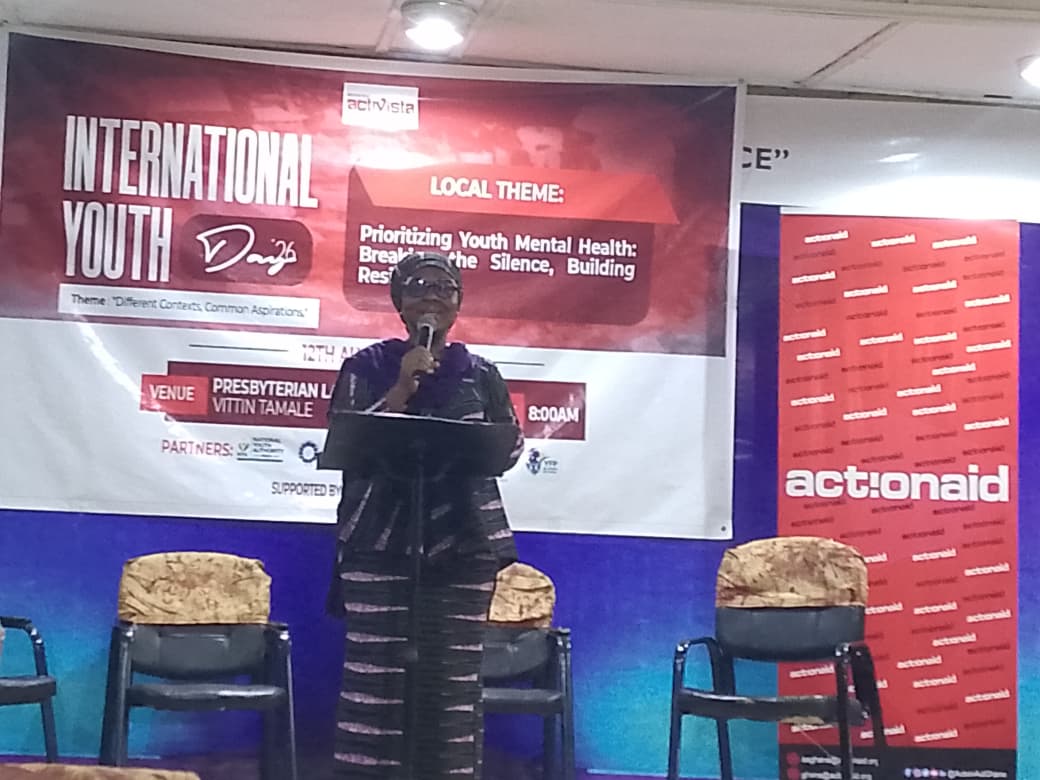
An urgent call has been made for stronger mental health support systems for young people in northern Ghana, with stakeholders urged to create safe spaces where youth can openly discuss emotional and psychological challenges without fear of stigma or discrimination.
Dr Fathiaya Nzhelayim Zakari, Advocacy and Engagement Officer at YEFL-Ghana, said silence and negative attitudes towards mental health were preventing many young people from seeking the support they needed, particularly in communities where mental health issues were often misunderstood.
She made the call while chairing this year’s International Youth Day celebration organised by the Northern Regional Chapter of Activista Ghana, the youth wing of ActionAid Ghana, in Tamale.
The event was held under the theme, “Different Contexts, Common Aspirations”, with a local focus on “Prioritizing Youth Mental Health: Breaking the Silence, Building Resilience”.
Dr Zakari said young people in northern Ghana faced unique pressures, including limited employment opportunities, fewer industries, economic uncertainty, dependence on climate-sensitive agriculture and expectations from families.
She explained that these challenges could significantly affect the mental wellbeing of young people, especially when adequate support networks were unavailable.
According to her, mental health concerns were frequently treated with silence, shame or misconceptions rather than understanding and professional support.
“Breaking the silence means creating spaces like this one where young people can talk about what they are carrying without shame and without judgment,” she said.
Dr Zakari stressed that resilience should not only involve encouraging young people to speak about their struggles, but also providing them with practical coping skills, supportive communities and access to mental health resources.
She urged stakeholders, including community leaders, educators, civil society organisations and policymakers, to work together to improve mental health awareness and support services for young people.
She also encouraged young people to recognise that despite differences in their social and economic circumstances, they shared common aspirations such as quality education, decent employment, participation in decision-making and a secure future.
Dr Zakari called for sustained collaboration to ensure that International Youth Day discussions resulted in concrete actions that would improve the wellbeing, opportunities and resilience of young people across northern Ghana.






