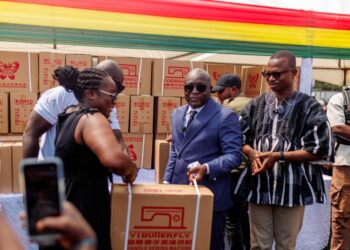
A fresh batch of 186 cadet officers has joined the country’s anti-drug enforcement frontline, following their graduation from the Ghana Navy Leadership Training School in Tema. Their commissioning coincided with a decisive directive from Interior Minister Muntaka Mubarak: the immediate activation of Ghana’s long-dormant Substance Use Disorder Rehabilitation Fund.
The fund, established under Section 22 of the 2020 Narcotics Control Commission Act, had yet to be operationalised—until now. At the colourful passing-out ceremony, Minister Mubarak declared drug addiction not only a public health crisis but also a threat to national security, and said urgent action was needed on both preventive and rehabilitative fronts.
“I have directed NACOC to immediately operationalise the Substance Use Disorder Rehabilitation Fund,” the Minister announced. “This fund will be a key instrument in supporting research and providing facilities for people struggling with substance use disorders.”
Mr. Mubarak pledged to contribute seed funding personally and called on the private sector to offer support through corporate social responsibility efforts. “This is a national fight. Every contribution matters,” he said.
He further underscored the growing complexity of drug trafficking operations and called for tighter coordination between NACOC and other national and international security agencies. “We cannot afford to work in silos anymore. The sophistication of these criminal networks demands collective intelligence and united action.”
The newly commissioned officers—now part of NACOC’s Cadet Course 8—underwent over six months of intensive training, including modules on passenger profiling, drug pharmacology, document fraud detection, and counter-narcotics intelligence. Their skills are expected to bolster Ghana’s capacity in tracking and intercepting drug networks.
The graduation ceremony, punctuated by drill displays and a parade featuring the Ghana Navy Regimental Band, was attended by top security brass, including Chief of Naval Staff Rear Admiral Godwin Livinus Bessing and NACOC Director General Brigadier General Maxwell Mantey. Proud family members and officials from the Interior Ministry also graced the event.
The Interior Minister assured the graduating officers that the government was aware of the operational and welfare challenges they face and was actively working to address them through resource investments, improved training programmes, and strengthened legal tools to prosecute traffickers.
“This is not just a job,” Mr. Mubarak said in his closing remarks. “It is a moral calling—to protect society, to give people a chance at recovery, and to ensure Ghana does not become a hub for drug trafficking.”
As the new officers take up their roles, Ghana’s anti-drug war enters a new phase—backed by legislation, fresh boots on the ground, and, finally, a focus on rehabilitation.