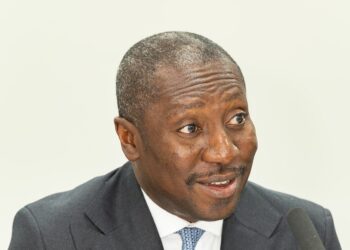
Vice President Professor Jane Naana Opoku-Agyemang is urging a major paradigm shift in Ghana’s development approach, calling for citizen-driven financing models to replace the country’s longstanding reliance on foreign aid.
Speaking at the opening of the 2025 Ghana Civil Society Forum in Accra, the Vice President said Ghana’s future lies in putting people—not donors—at the centre of its development strategy. She called on government and civil society to forge a new “social contract” that anchors financing in civic participation and transparency.
“Development is not merely about money—it’s about agency,” she said. “We must reimagine financing to reflect the power and priorities of our citizens.”
Her remarks come at a time when international aid is shrinking, and Ghana faces mounting economic and social pressures. The call to action aligns with global conversations around decolonising development and reducing dependence on donor-driven agendas.
Held under the theme “Reimagining Development Financing and Civic Action – Challenges, Opportunities, and the Way Forward,” the two-day forum brought together over 500 stakeholders, including academics, civil society leaders, donors, and government officials.
Opoku-Agyemang emphasised that real development must grow from the grassroots and be grounded in co-creation with communities—not dictated by external interests.
She advocated for reforms to Ghana’s regulatory environment, including the passage of the Non-Profit Bill, which is expected to create a more secure space for civic organisations while enforcing transparency and accountability.
“Civil society must not only be watchdogs,” she said, “but also co-authors of Ghana’s development story.”
She also challenged CSOs to channel more resources toward youth leadership, given that nearly 60% of Ghana’s population is under the age of 25. “Our youth are our greatest asset—this is the moment to unleash their creativity and energy.”
Other speakers echoed the call for transformation. Dr. Nii Moi Thompson, Chair of the National Development Planning Commission, described the moment as a “do-or-die” scenario for Ghanaian civil society.
“If CSOs want to be taken seriously in this new era of development, they must deliver value,” he said. “Donors are fatigued. Citizens are demanding more. The credibility gap must be closed.”
He pushed for a “productivity revolution” within the civic sector—one that emphasises results, transparency, and strategic partnerships.
Dr. Thompson also proposed innovative domestic financing strategies such as social enterprises, digital fundraising, and diaspora bonds, arguing that only financially self-reliant CSOs can shape sustainable development.
STAR-Ghana Foundation Executive Director Ibrahim-Tanko Amidu offered a sobering reality check: “We are at a crossroads. The world is changing, and civil society must adapt or risk irrelevance.”
He stressed that the time was ripe for civil society to redefine its social contract with Ghanaians through deeper community engagement, values-based leadership, and smarter resource mobilisation.
The forum, organised by STAR-Ghana in collaboration with Oxfam, WACSI, Transparency International Ghana and others, is expected to produce a roadmap for reforming how civil society operates and funds its activities—marking a possible turning point in Ghana’s development journey.