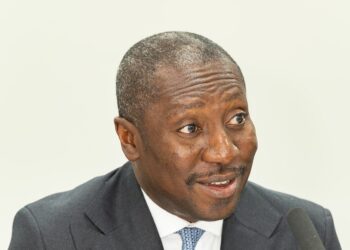
The legal challenge by Ofoase-Ayirebi MP Kojo Oppong Nkrumah against the conduct of selected criminal trials during Ghana’s legal vacation has returned before the Supreme Court, with the legislator seeking a fresh review of an earlier decision that rejected his request for an injunction.
Mr Oppong Nkrumah is asking a three-member panel of the Supreme Court to overturn the ruling of Justice Gabriel Scott Pwamang, who on August 21, 2026, dismissed his application for an interlocutory injunction.
The latest application seeks to temporarily restrain the Chief Justice and designated High Court judges from implementing directives requiring them to sit during the legal vacation to hear criminal cases.
The legal vacation runs from August 1 to September 30, 2026.
At the centre of the dispute is a constitutional challenge filed by Mr Oppong Nkrumah over administrative directives issued by the Chief Justice authorising selected High Court judges to conduct criminal trials during the vacation period.
The MP argues that the continuation of the arrangements while the substantive constitutional case remains pending could undermine the effectiveness of the legal challenge.
Challenges earlier ruling
In his latest application, Mr Oppong Nkrumah contends that Justice Pwamang made several errors in arriving at the decision to dismiss the injunction request.
One of the key issues raised concerns the role of the Attorney-General in representing the Chief Justice in a case where the Chief Justice’s administrative actions are themselves being challenged under Articles 23 and 296 of the 1992 Constitution.
The MP argues that the issue was not properly resolved at the earlier stage.
He also maintains that the Chief Justice’s failure to respond to his affidavit and deny his statement of case should have been considered when the injunction application was being determined.
Another ground of challenge is that the single Justice allegedly went beyond the appropriate scope of an interlocutory application.
According to Mr Oppong Nkrumah, although Justice Pwamang acknowledged that the substantive constitutional questions were not for final determination at the interlocutory stage, aspects of the ruling nevertheless made definitive observations that, in his view, could prejudge matters reserved for the full bench.
Public interest argument
The legislator is also relying on public interest considerations in urging the three-member panel to grant the interim relief.
He argues that the constitutional questions raised in the substantive case are significant and that allowing the disputed arrangements to continue could affect the outcome or effectiveness of the proceedings.
He further points to the time-sensitive nature of the warrants issued for judges to sit during the legal vacation, arguing that the need for interim intervention has become more pressing because the vacation period is already underway.
Mr Oppong Nkrumah maintains that the balance of convenience favours temporarily suspending the implementation of the directives rather than allowing the affected criminal trials to proceed before the substantive constitutional challenge is determined.
He is therefore asking the three-member panel to issue an interlocutory injunction restraining the Chief Justice and the designated judges from implementing, enforcing or giving effect to the warrants authorising the High Court judges to sit during the legal vacation.
The latest application means the Supreme Court will now have to consider whether the grounds raised by the MP justify revisiting the earlier decision and granting the interim relief he is seeking pending determination of the substantive constitutional case.