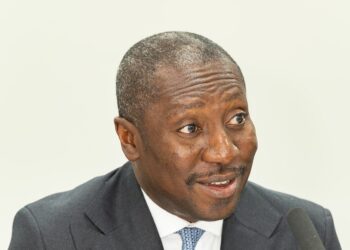
Lawyer for Ofoase-Ayirebi MP Kojo Oppong Nkrumah, Frank Davies, has renewed concerns over the Attorney General’s decision to represent Chief Justice Paul Baffoe-Bonnie in a constitutional case challenging the conduct of High Court proceedings during the legal vacation.
Mr Davies argues that the Chief Justice, having been named personally as a defendant in the suit, should have independent legal representation rather than being represented by the Attorney General, an arm of the Executive.
He raised the concern following proceedings at the Supreme Court, stressing that the arrangement could raise questions about the constitutional separation of powers.
“The Chief Justice heads an independent organ of the state, the judiciary. We have the judiciary, the legislature, and the executive. They are supposed to be independent organs of the state,” he said.
The Supreme Court had earlier rejected the objection to the Attorney General’s representation of the Chief Justice.
Despite the ruling, Mr Davies said his legal team would abide by the court’s position and concentrate on the substantive constitutional questions before the court.
Fair trial rights at centre of dispute
At the heart of the case is the Chief Justice’s issuance of administrative warrants permitting selected High Court judges to continue hearing criminal cases during the legal vacation, which runs from August 1 to September 30.
Mr Davies contends that continuing some trials during the vacation could undermine the constitutional rights of accused persons, particularly their right to legal representation by lawyers of their choice.
He stressed that the MP was not seeking to prevent criminal cases from being heard.
“We are not saying that they should not be tried. What we are saying is that the continued trial of the cases in the legal vacation offends their right to fair representation and lawyers of their own choice,” he said.
According to the lawyer, some lawyers representing accused persons had notified the courts that they were unavailable to participate in proceedings during the vacation.
He argued that the established practice had been for trials to continue during the legal vacation where the lawyers involved agreed, after which the judge could obtain the necessary warrant from the Chief Justice.
Mr Davies maintains that the circumstances surrounding the cases currently under challenge are different because, according to him, the lawyers had not consented to the continuation of the trials.
Lawyer questions selective trials
The MP’s lawyer also questioned why only certain criminal cases had been selected for hearing during the legal vacation while other matters before the same courts had not received similar treatment.
“If it is the case that there can be trials during the vacation, why is it that it is only those selected cases which are being tried?” he asked.
The challenge therefore raises broader questions about the exercise of administrative authority during the legal vacation and its impact on the rights of accused persons.
The Supreme Court, sitting on the matter, has scheduled Friday, August 21, 2026, to deliver its ruling.
The substantive suit filed by Mr Oppong Nkrumah seeks to determine whether the administrative warrants issued by the Chief Justice are constitutionally valid and whether the affected criminal proceedings can lawfully continue during the legal vacation.