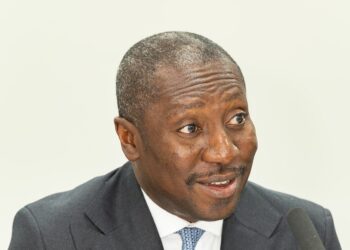
Former Vice President of Nigeria, Prof. Yemi Osinbajo, has urged African countries to move beyond responding to global economic decisions and take an active role in shaping the institutions and rules that govern the international economic system.
He said Africa’s limited involvement in the creation of major global economic institutions had contributed to a situation where rules affecting the continent were developed without adequate African representation.
Prof. Osinbajo argued that the continent must now use its collective strength to influence the processes that determine its economic development and future.
“I think that there is a sense that it is time to take on the responsibility for determining the future of African economies and African trajectories, African destinies,” he said.
He made the remarks in an interview with Bernard Avle on Channel One TV’s The Point of View on Monday, September 14, 2026.
Prof. Osinbajo, who is Co-Chair of the Future of Development Cooperation Coalition (FDCC), is in Ghana with other dignitaries for an African Centre for Economic Transformation (ACET) event under the theme, “Securing Africa’s Future.”
According to him, greater African influence in global affairs must begin with participation in the processes through which international economic institutions and rules are designed.
“One of the key things is to be involved in the process of shaping the institutions, shaping the rules that will determine the future of the continent,” he said.
He observed that most African countries were largely absent when many of the institutions underpinning the current global economic order were established.
“The development of the institutions on which our current economic arrangements are based did not have Africa at the table for most African countries,” he said.
Prof. Osinbajo said the absence of African countries from those processes meant that rules were formulated without sufficient consideration of the continent’s circumstances and interests.
“Despite the numbers, despite all of the very important issues they had to contend with, they were simply not at the table, and the rules were being drawn up,” he said.
He said the FDCC was therefore seeking to strengthen Africa’s capacity to influence decisions on development and international economic cooperation.
“It’s about agency. It’s about African agency,” he said.
Prof. Osinbajo stressed that African agency should involve taking responsibility for the continent’s economic trajectory rather than leaving its future largely to decisions made elsewhere.
He said the prevailing global environment offered Africa an opportunity to assert itself more strongly in international development and economic affairs.
“I think the timing is exactly right,” he said.