
















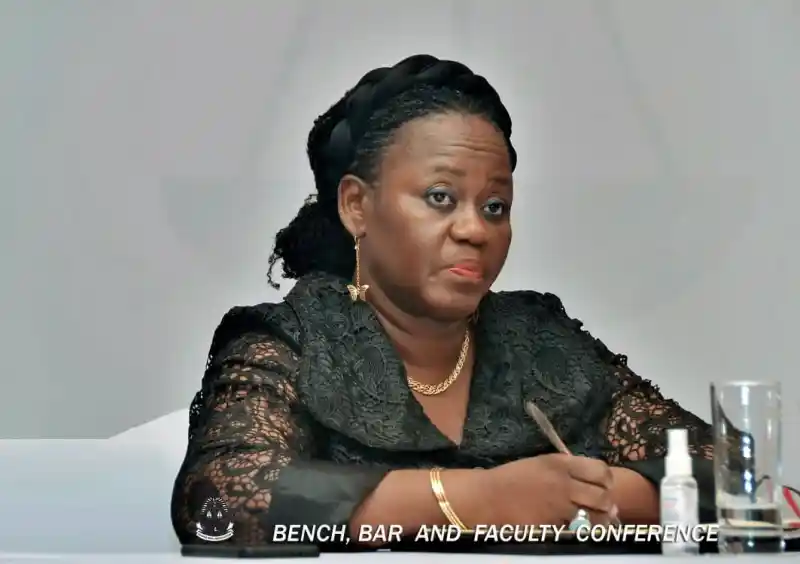
The removal of former Chief Justice Gertrude Araba Esaaba Sackey Torkornoo by President John Dramani Mahama has ignited a constitutional storm, raising urgent questions about the balance of power between the executive and the judiciary in Ghana’s democracy.
Justice Torkornoo, who lost her position as both Chief Justice and Justice of the Supreme Court on September 1, has taken the matter to the High Court, insisting that the President acted outside the 1992 Constitution. Her legal challenge invokes Articles 23, 141, and 146 of the Constitution, arguing that only a properly constituted body under Article 146(4) can determine the removal of a superior court judge.
At the heart of the case is the principle of judicial independence. Analysts warn that if the President’s removal warrant is upheld without adherence to Article 146 procedures, it could set a precedent that undermines the security of tenure of judges, leaving them vulnerable to executive interference.
Legal experts say the outcome of the case, The Republic v. Attorney-General, Ex Parte Justice Gertrude Araba Esaaba Torkornoo, could redefine the boundaries of presidential authority. A ruling in favour of the applicant would reaffirm constitutional safeguards, while a ruling against could reshape the power dynamics between Ghana’s three arms of government.
Beyond the courtroom, the case has sparked public debate. Civil society organisations have already expressed concern that the President’s decision may erode confidence in the impartiality of the judiciary at a time when public trust in democratic institutions is being tested.
For many observers, Justice Torkornoo’s challenge is not just about her personal reinstatement, but about protecting the institutional independence of the judiciary and ensuring that constitutional governance remains intact.






