
















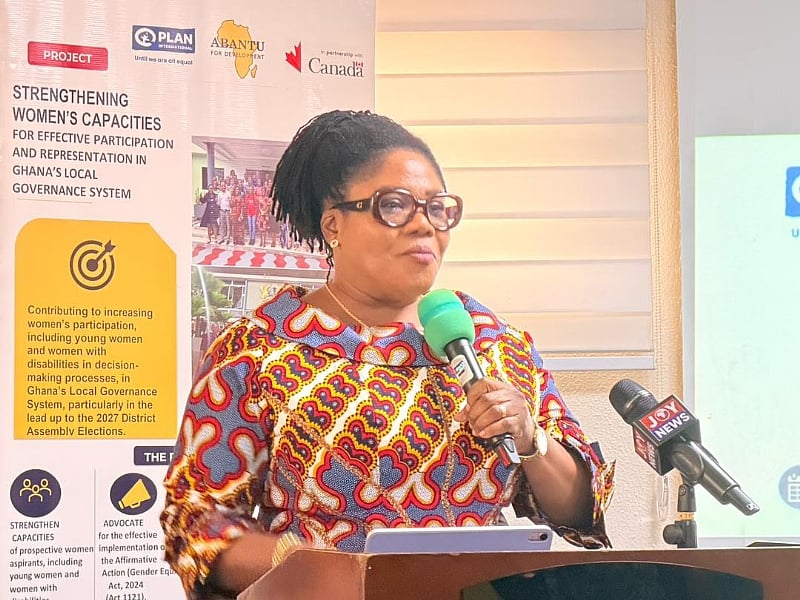
Thirty aspiring female leaders have been selected to participate in a new capacity-building initiative aimed at increasing women’s representation in Ghana’s local governance system ahead of the 2027 District Assembly elections.
The programme, launched in Accra by the Minister for Gender, Children and Social Protection, Dr Agnes Naa Momo Lartey, seeks to equip women with the leadership, advocacy, and governance skills needed to contest and succeed in local government elections.
Addressing participants at the launch, Dr Lartey encouraged the beneficiaries to take advantage of the opportunity to strengthen their confidence, expand their leadership abilities, and deepen their understanding of governance processes to better serve their communities.
She described the project as a timely intervention that aligns with national efforts to promote gender equality and prepare more women for leadership positions at the local level.
According to the Minister, the initiative supports the implementation of the Affirmative Action Act, which targets increased female representation in decision-making positions, with a minimum threshold of 30 per cent from 2024 to 2026, 35 per cent from 2027 to 2028, and 50 per cent by 2034.
Dr Lartey highlighted measures already undertaken by the Ministry to advance the implementation of the law, including the establishment of a Gender Equity Committee, the submission of legislative instruments to Parliament, and the creation of a dedicated secretariat.
She noted that the Ministry is also implementing the National Gender Policy 2025–2034, which focuses on women’s empowerment, leadership development, access to education, skills training, and inclusive governance.
The Minister called on stakeholders to support efforts to create a society where women’s participation in governance is commonplace and where girls can aspire to leadership roles without limitations.
The project, which is being implemented by Abantu for Development and Plan International Ghana, will focus on mentoring, leadership development, and electoral preparedness to help participants effectively engage in local governance and public service.






