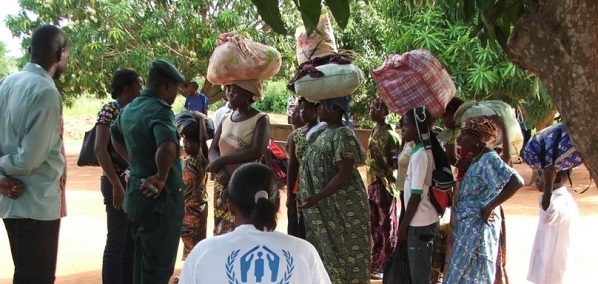
The Ghana Refugee Board (GRB) has emphasized that refugees are not a liability to host nations but valuable contributors with skills and expertise that can drive local development.
This assurance came during the launch of a six-month support project for Persons of Concern (PoCs) at the Tarikom Refugee Camp in the Bawku West District, an initiative jointly spearheaded by the Economic Community of West African States (ECOWAS) and the Government of Ghana. The programme will officially begin on October 1, 2025.
Mr. Tetteh Padi, Executive Secretary of the GRB, said that many refugees arrive with professions and qualifications that allow them to actively contribute to host communities. He noted that Ghana’s approach, through livelihood initiatives such as the Ghana Refugee Agribusiness Sustainability Programme (GRASP), is to create opportunities for refugees to work, earn income, and support national growth.
“Refugees have been clear with us: they are not here for handouts but for the chance to work. By integrating them into projects like GRASP, we are not only protecting their dignity but also aligning with national programmes such as Feed Ghana,” he explained.
The project, which is a collaboration between the GRB, Right To Be Free (an NGO), and the National Disaster Management Organization (NADMO), is designed to empower refugees, asylum seekers, returnees, and internally displaced persons with sustainable livelihoods.
Dr. Stintiki Tarfa Ugbe, Director of Humanitarian and Social Affairs at the ECOWAS Commission, said the initiative was proof that humanitarian assistance extends beyond crisis response. “It is about building resilience and dignity, ensuring every person can thrive regardless of circumstance,” she stressed.
She added that the project’s strength lies in its community-based approach, with chiefs, local leaders, and development partners playing a key role in ensuring smooth integration and peaceful coexistence.
Mr. Donatus Akamugri Atanga, Upper East Regional Minister, commended ECOWAS for backing Ghana in upholding its long tradition of hospitality. He said the intervention would help strengthen service delivery and capacities at a time when West Africa continues to grapple with conflict, instability, and climate challenges.
Stakeholders expressed optimism that the collaboration will not only uplift refugees but also stimulate economic activity in host communities, proving that displacement, when managed inclusively, can be transformed into an opportunity for shared growth.