
















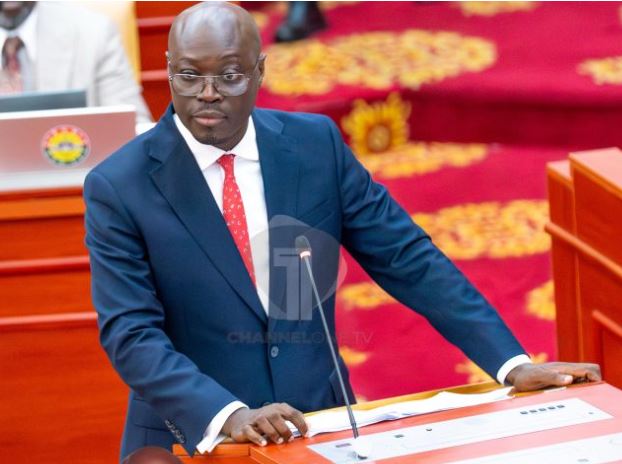
The government has announced plans to amend ten key laws to align with its economic stability and inclusive growth agenda. This was disclosed by the Minister of Finance, Dr. Cassiel Ato Forson, during the presentation of the 2025 Budget Statement to Parliament.
The affected laws span various sectors, including petroleum, energy, minerals, procurement, and public financial management. Among them are the Petroleum Revenue Management Act, 2011 (Act 815); Ghana Infrastructure Investment Fund Act, 2014 (Act 877); Minerals Income Investment Fund Act, 2018 (Act 978); Energy Sector Levies Act (ESLA), 2015 (Act 899); Ghana Cocoa Board Act, 1984 (PNDCL 81); and the Earmarked Funds Capping and Realignment Act, 2017 (Act 947). Others include the Public Procurement Authority Act, 2003 (Act 663, as amended); Ghana Education Trust Fund (GETFund) Act, 2000 (Act 581); Fiscal Responsibility Act, 2018 (Act 982); and the Revenue Administration Act, 2016 (Act 915).
According to Dr. Forson, the Petroleum Revenue Management Act will be revised to direct all Annual Budget Funding Amount (ABFA) allocations solely to infrastructure projects. Additionally, the Energy Sector Levies Act will be amended to consolidate key levies, including the Energy Debt Recovery Levy, Energy Sector Recovery Levy (Delta Fund), and Sanitation & Pollution Levy, into a single levy to manage energy sector deficits and service inherited debts. However, other energy levies such as the Road Fund Levy, Energy Fund Levy, Public Lighting Levy, and National Electrification Levy will remain unchanged to fulfill their intended purposes.
The Earmarked Funds Capping and Realignment Act is set for review to fully restore government transfers to the Ghana National Petroleum Corporation (GNPC) while reducing its share of net Carried and Participating Interest (CAPI) from 30% to 15%. Additionally, the National Health Insurance Levy (NHIL), GETFund, and Road Fund will be exempted from capping, ensuring they receive full allocations.
To enhance fiscal discipline, amendments to the Public Procurement Act will introduce an Independent Value-for-Money Office to oversee large government procurements. The reforms will also make budgetary provisions and commencement certificates mandatory before government procurements are approved for payment.
Furthermore, the Minerals Income Investment Fund (MIIF) Act will be amended to transfer 80% of mineral royalties from MIIF to the Consolidated Fund for infrastructure development. Other key fiscal reforms include reducing the tax refund ceiling from 6% to 4% of total revenue, gradually reducing the fiscal deficit, and ensuring that the Free Senior High School (SHS) policy is fully funded through the GETFund.
These legal reforms are part of the government’s broader strategy to improve public financial management, optimize revenue utilization, and drive long-term economic growth.






