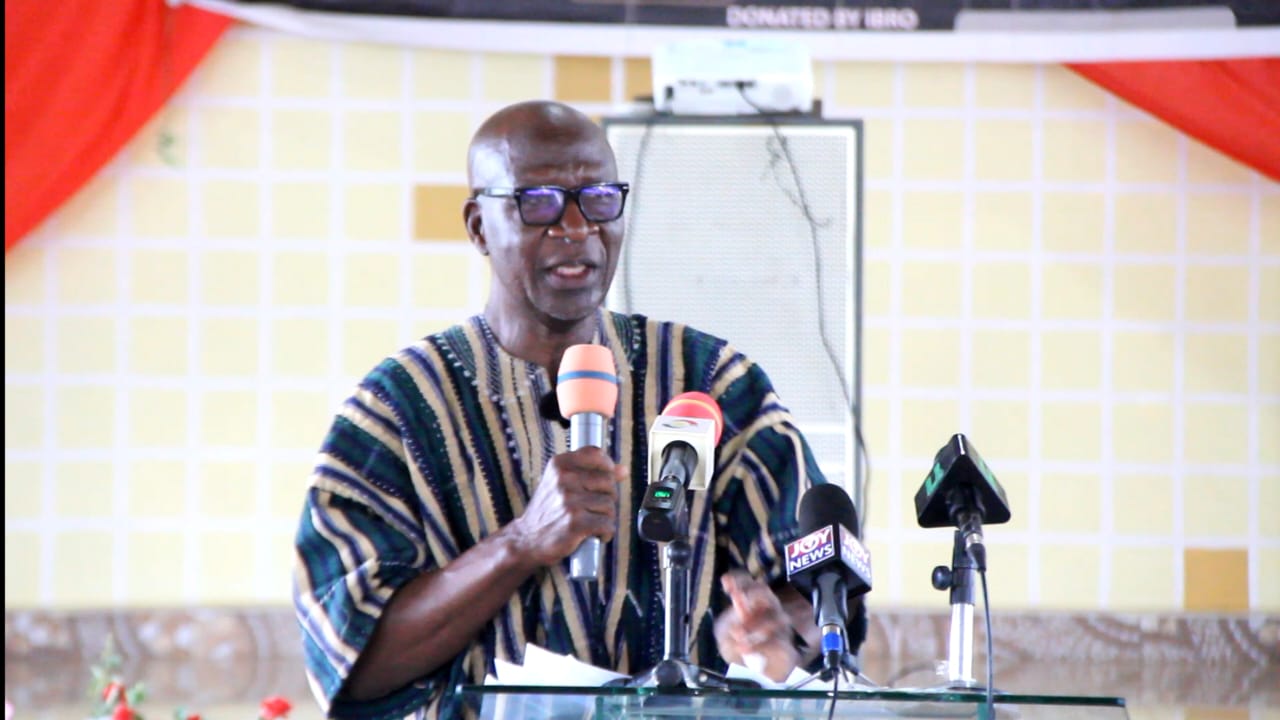
Strengthening state institutions and promoting accountability remain critical to safeguarding Ghana’s democracy, Rector of the Ghana Institute of Social Democracy, Dr William Ahadzi, has stated.
Speaking at a public lecture in Banda-Ahenkro to mark the 47th anniversary of the June 4, 1979 uprising, Dr Ahadzi said the historic event continues to offer important lessons on governance, transparency, and responsible leadership.
Addressing participants on the theme, “Strengthening State Institutions: Lessons from the June 4, 1979 Uprising,” he noted that the uprising reshaped Ghana’s political landscape and reinforced the need for leaders to remain accountable to the people.
According to him, the events of June 4 highlighted the consequences of abuse of power and underscored the importance of fairness, social justice, and transparency in public administration.
Dr Ahadzi stressed that robust institutions are essential in preventing political instability and ensuring that grievances are addressed through lawful and democratic processes rather than public unrest.
He pointed to institutions such as the Commission on Human Rights and Administrative Justice (CHRAJ) as examples of reforms inspired by the national demand for accountability and integrity in governance.
The Rector also cautioned against actions that undermine the rule of law, warning that perceptions of injustice and arbitrary decision-making could weaken public trust and threaten social stability.
He further emphasised the need to preserve the neutrality and professionalism of the military and security agencies, noting that political interference in such institutions could compromise democratic governance.
Dr Ahadzi linked institutional effectiveness to economic conditions, arguing that persistent inequality and hardship could erode confidence in state structures and democratic systems.
Meanwhile, Minister for Local Government, Chieftaincy and Religious Affairs, Ahmed Ibrahim, called on the National Democratic Congress (NDC) to intensify efforts to educate younger generations about the significance of the June 4 Revolution and its place in Ghana’s political history.
He also urged the United Cadres Front to continue promoting accountability and safeguarding the ideals associated with the revolution, while preserving the legacy of former President Jerry John Rawlings and other national figures for future generations.
The event brought together party members, cadres, traditional leaders, and residents to reflect on the historical significance of June 4 and its enduring relevance to Ghana’s democratic development.