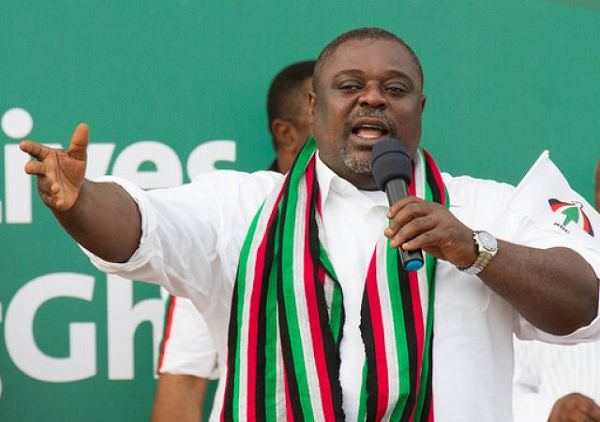
Koku Anyidoho, the outspoken Founder and President of the Atta Mills Institute, has come out strongly to reaffirm his allegiance to the National Democratic Congress (NDC), rejecting claims that he has distanced himself from the party.
In an exclusive interview with Blakk Rasta, Anyidoho addressed the rumors that he had left the NDC, stating unequivocally, “I never left the NDC, and I have never left the party.” His comments come after a series of statements suggesting a rift between him and the party, especially following his suspension by the NDC in recent years.
Anyidoho’s suspension from the NDC has long been a point of contention. He argued that the suspension, initiated by the then-General Secretary of the party, was unfair and did not follow the necessary legal and procedural steps. “How do you pronounce a man guilty without giving him a fair hearing? I received no letter, no correspondence—nothing,” he said, emphasizing the lack of communication or official notice that he received about the matter.
His frustration with the manner in which his suspension was handled is palpable, with Anyidoho asserting that he was sidelined without a formal process, leaving him to question the fairness of the decision.
While acknowledging that he may have differing views from time to time, Anyidoho made it clear that having contrary opinions does not equate to leaving the party. “I have always made my position clear. Yes, I have contrary opinions on certain matters, but does that mean I have left the party? No,” he asserted.
This declaration marks a significant point in the ongoing dialogue about internal dissent within political parties, particularly within the NDC, where leaders and members occasionally express divergent views on key issues.
One of the most common accusations leveled against Anyidoho is his alleged discord with former President John Mahama. However, Anyidoho strongly dismissed these claims, stating, “I have never disrespected Mahama. People fabricate things to suit their agenda.” He further emphasized that despite the rumors, he had never engaged in any attack on Mahama and that his disagreements, if any, were purely political and not personal.
This statement aims to quell speculation about a rift within the party’s leadership and reaffirm Anyidoho’s commitment to the principles of the NDC, regardless of any political differences.
When asked about the possibility of reconciliation with the party, Anyidoho indicated that he was open to dialogue but made it clear that those who were responsible for his suspension must first recognize and admit their errors. “If there is any magnanimity, it should come from those who wielded the axe without cause,” he stated, suggesting that reconciliation would require a willingness from both sides to acknowledge past mistakes.
His stance highlights the importance of accountability within political structures and the need for healing processes to be rooted in truth and transparency.
Anyidoho’s insistence that he remains a loyal member of the NDC, despite being sidelined in the past, raises important questions about the future of his relationship with the party. Will the NDC seek to reconcile with him, or is this simply a case of political maneuvering in the lead-up to future elections? Only time will tell.
As Anyidoho continues to advocate for the values of the Atta Mills Institute and the NDC, his public statements serve as a reminder that loyalty to a party is often tested by internal conflicts, but true commitment lies in the ability to remain engaged and actively participate in the political discourse.