
















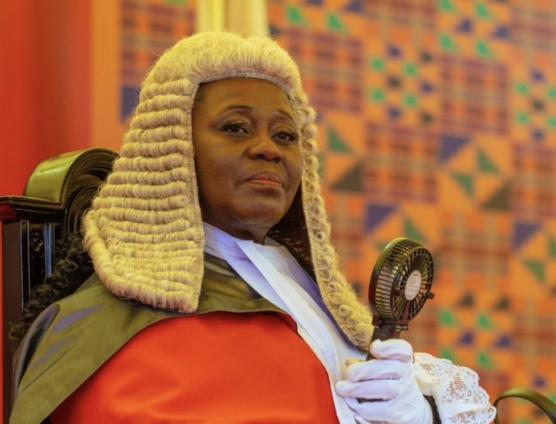
Mounting public dissatisfaction with Ghana’s judiciary has come to the fore, as a recent poll by Global InfoAnalytics shows that a majority of Ghanaians support the removal of Chief Justice Gertrude Araba Esaaba Sackey Torkornoo.
The findings, released this week, suggest growing concerns about judicial accountability and transparency at the highest levels of the legal system.
According to the survey, 52% of respondents favor the Chief Justice’s removal, compared to 20% who are opposed. An additional 18% remained neutral, while 10% had no opinion. The data points to a nationwide sentiment, with the call for removal echoing across most regions and educational backgrounds.
In Greater Accra, where public opinion often reflects national sentiment, 58% of voters expressed support for her ousting, while only 16% disagreed. Similar trends were recorded in the Central Region (51% support, 16% oppose) and among tertiary-educated citizens (54% support, 18% oppose). Interestingly, even among those with no formal education, opinions were nearly split, with 37% supporting and 30% opposing.
The poll, which surveyed 2,545 registered voters between April 7 and 16, 2025, boasts a 99% confidence level and a ±1.51% margin of error, giving credibility to the breadth of sentiment captured.
The Chief Justice has been the subject of intense scrutiny following petitions filed by three individuals accusing her of misconduct. These petitions have since reached President John Mahama, who has forwarded them to the Council of State for advisory input—an action that itself has sparked legal debate.
Vincent Ekow Assafuah, MP for Tafo, has challenged the President’s handling of the petitions, accusing him of breaching constitutional procedure by failing to notify the Chief Justice before involving the Council of State. The matter is now before the Supreme Court, which is set to resume hearings on May 6.
As the judiciary grapples with both legal and public pressure, the Global InfoAnalytics poll underscores a wider demand for reforms and transparency in Ghana’s legal institutions.
While the Chief Justice is yet to officially respond to the allegations or mounting calls for her removal, the data suggests that public trust in the judiciary may be waning—raising broader questions about the balance of power, constitutional checks, and the future of justice in Ghana.






