
















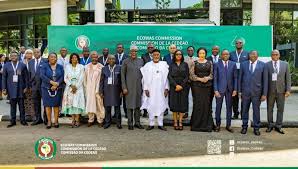
As West Africa navigates one of its most delicate political moments in recent history, the ECOWAS Council of Ministers is convening in Accra for a crucial Extraordinary Session aimed at addressing the departure of Burkina Faso, Mali, and Niger from the regional bloc.
The two-day meeting, from April 22 to 23, coincides symbolically with the launch of ECOWAS’ 50th anniversary celebrations, underscoring a dual mission of celebrating regional unity while urgently working to rebuild fractured ties.
The three Sahelian nations announced their withdrawal in January 2025, citing disagreements with ECOWAS over its call for a return to democratic governance in Niger following the 2023 military coup. Since then, the trio has formed the Alliance of Sahel States and introduced new biometric passports, signaling a shift toward regional autonomy.
In a bid to restore dialogue, President John Dramani Mahama has taken on a leading diplomatic role. He has held private meetings with leaders of the breakaway states to explore pathways back to cooperation. In a gesture of goodwill, he extended formal invitations for them to attend the ECOWAS golden jubilee celebrations in Accra—a move met without resistance and seen as a promising sign of openness to reunification.
Mahama has since briefed ECOWAS Chair, Nigerian President Bola Ahmed Tinubu, on the initiative, as efforts intensify to bridge political divides and prevent further regional fragmentation.
The Council of Ministers is expected to deliberate on the modalities of withdrawal, institutional impacts, and potential reforms to safeguard regional cohesion. Though ECOWAS granted the Sahel states a six-month grace period in December 2024 to reconsider, the coming days may determine whether diplomacy can reverse the current trajectory.
Despite the rift, ECOWAS has maintained open lines of engagement—recognising Sahelian passports with ECOWAS insignia, allowing trade continuity, and upholding diplomatic ties. These steps, leaders say, reflect the bloc’s resilience and commitment to a united West Africa, even in times of political turbulence.
As Accra becomes the center of regional diplomacy this week, the outcome of these meetings may define the future of multilateralism and peace in West Africa.






