
















Story Daniel Kwaku Merki
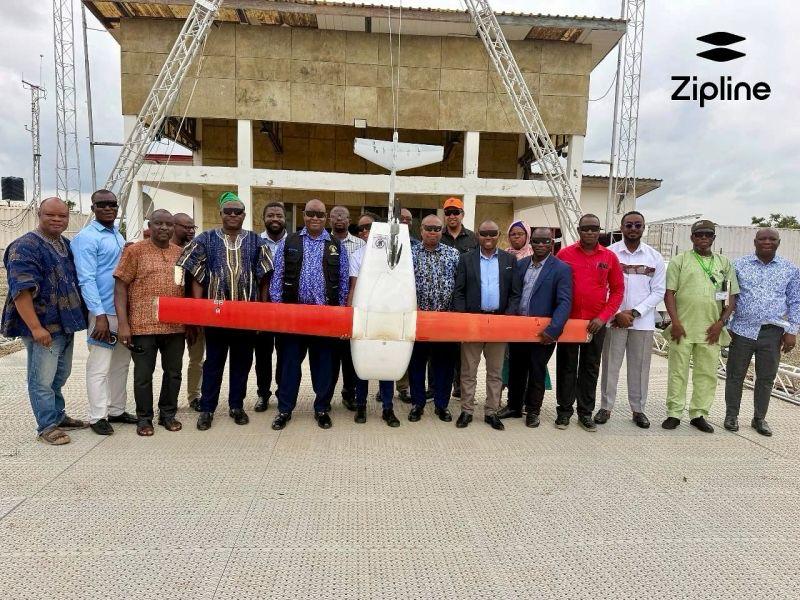
On 28 July, Zipline welcomed 21 health leaders from the Northern, North East and Upper East Regions to Zipline Ghana’s GH-3 distribution centre in Vobsi.
While Ghana expands foundational infrastructure, including reliable electricity for all, it must also integrate 21st-century general-purpose technologies into its national architecture to leapfrog entire systems.
For Zipline Ghana, our vision is to provide technology and services for national infrastructure that strengthens healthcare and serves as a rural development engine.
This infrastructure was built with the Government of Ghana, Ghana Civil Aviation Authority, Ghana Air Force, Ministry Of Health, Ghana, Ghana Health Service, National Blood Service Ghana and others.
It could support the administration’s three-layer healthcare vision:
– Free Primary Healthcare – bringing 11 million additional Ghanaians into care.
– NHIS – supporting referrals for higher-level care.
– MahamaCares – supporting advanced cancer, renal and other specialised care.
Zipline can support the logistics beneath all – helping financial access translate into access to medicines, vaccines, blood and specialised products.
It can enable a shift from bulk, forecast-based push distribution to a pull system where facilities order what they need, when they need it – reducing wastage and stockouts while improving availability and health outcomes.
In Ashanti, Zipline-served facilities were associated with a 56.4% relative reduction in maternal deaths.
In Western North, Zipline infrastructure enabled thousands more children to become fully immunised.
Research around GH-3 suggests that this infrastructure can become a rural development engine, with economic impact around Vobsi measurable from space.
It could support key government initiatives, including the 24-Hour Economy & Accelerated Export Development (24H+), its flagship Volta Economic Corridor (VEC), and the Accra Reset.
Under 24H+, autonomous logistics could enable round-the-clock healthcare, high-skilled employment and reliable movement of essential products beyond our major cities.
At night, would you rather send a multi-tonne, human-driven ambulance along dark, difficult roads to deliver blood – or dispatch an autonomous aircraft directly to the health facility?
Ghana’s road-injury mortality increased by an estimated 48.5% between 2010 and 2023.
Within the VEC, it could complement agriculture, manufacturing, transport and trade by connecting rural production centres and communities to on-demand logistics.
For the Accra Reset, it could consolidate fragmented government delivery systems, strengthen domestic health financing and create a route to market for locally manufactured medicines and vaccines.
We will engage widely. If you are building across healthcare, technology, logistics or rural development, let’s connect.
Zipline is a leading Physical AI and robotics company.






