
















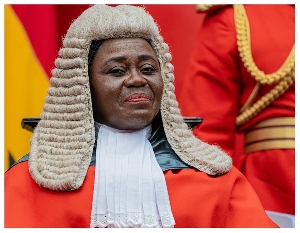
Chief Justice Gertrude Torkornoo has turned the tables on allegations of financial impropriety, publishing a point-by-point rebuttal that frames the accusations as a misunderstanding of the Judicial Service’s own travel regulations.
In a detailed response to President John Dramani Mahama—stemming from a 21-point petition by private citizen Daniel Ofori—Torkornoo insists every cedi spent on her 2023 foreign trips falls squarely within the Judicial Service’s 2010 travel policy (amended 2019).
Key clarifications include:
- Companion Allowance: Paragraph A(9) explicitly grants the Chief Justice “unlimited official travels with either his/her Spouse or other person of his/her choice,” fully funded by the Service. Paragraph A(10) then allows travel in the same class and partial per diem for that companion. Torkornoo traveled twice—once with her husband, once with her daughter—and did so under this standing entitlement.
- Imprest Account Reconciliation: Far from hiding cash, she reports returning USD 9,588.20 of a USD 14,000 advance within two days of her Tanzania trip, having spent only USD 4,411. Documentation dated 14 September 2023 accompanies this explanation.
- Medical Emergency & Ticket Changes: When a bout of exhaustion in Arusha necessitated an early return, she booked new flights—not out of pocket, but per procedure—so she could attend a Ghana Bar Association conference in Cape Coast without delay.
Torkornoo also emphasizes she never handles ticket purchases, per diems, or account sign-offs herself—those functions rest with Judicial Service administrators, undercutting claims of unilateral control over funds.
“As Chief Justice, I am not signatory to any account and do not have access to the accounts of the Judicial Service,” she notes, underscoring her procedural safeguards.
Concluding her 7 April 2025 submission, the Chief Justice labels Ofori’s petition a “wrong presentation of this expenditure,” born from an outsider’s “flawed interpretation of official records.”
This disclosure not only rebuffs the latest challenge to her tenure under Article 146 of the Constitution but also casts a spotlight on the need for public understanding of judicial administrative policies—a transparency that Torkornoo has now brought firmly into the open.






