
















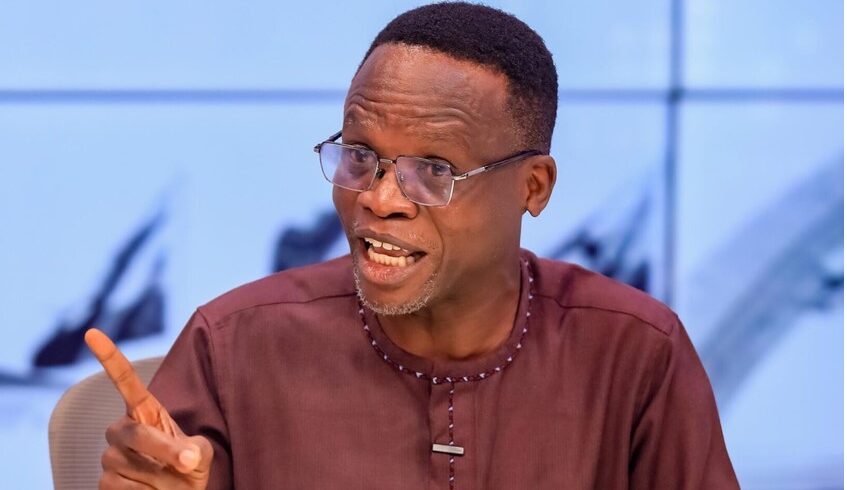
Economist Dr George Domfe has cautioned that Ghana’s rising debt-to-GDP ratio suggests the country’s growing public debt cannot be attributed solely to exchange rate movements.
His comments follow reports that Ghana’s public debt stock increased by nearly GH¢47 billion between February and May 2026.
Speaking on the Asaase Breakfast Show on Wednesday, July 22, Dr Domfe said while fluctuations in the value of the cedi could significantly affect the local currency value of Ghana’s debt, the debt-to-GDP ratio provided a clearer picture of the country’s debt sustainability.
He explained that the cedi value of external debt could rise or fall depending on exchange rate movements, even when the actual dollar value of the debt was declining.
He therefore urged stakeholders to be cautious when interpreting nominal debt figures.
“We need to be very careful when we are discussing debt and using nominal figures,” he said.
However, Dr Domfe said the increase in Ghana’s debt-to-GDP ratio from 42.2 percent in February to 45.1 percent in May pointed to a more fundamental concern.
According to him, the increase indicates that the growth in public debt has outpaced economic expansion, suggesting that new borrowing was also contributing significantly to the rise in the debt burden.
“The debt-to-GDP ratio is what is telling us that the increase is not all exchange rate. Exchange rate might have partly contributed, but significantly the government is borrowing,” he said.
Dr Domfe noted that previous periods of cedi depreciation had also caused Ghana’s debt stock to rise sharply in local currency terms without necessarily representing equivalent levels of fresh borrowing.
He therefore stressed the need to distinguish between changes caused by currency valuation and actual increases in the country’s debt obligations.
The economist urged the government and stakeholders to focus not only on the size of Ghana’s debt but also on how borrowed funds were being used.
He said borrowing would be more sustainable if it supported investments capable of expanding the economy, generating returns and strengthening Ghana’s capacity to repay its obligations.






