
















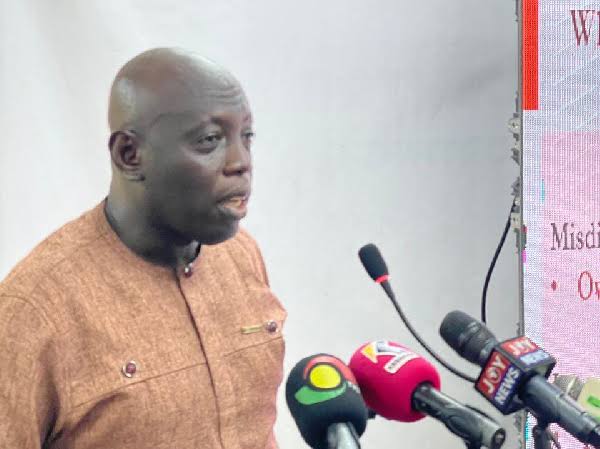
The government must account for the progress and expenditure of its $4 billion 24-hour economy programme before committing to a proposed $10 billion New Economy Initiative, the Executive Director of the Institute of Economic Research and Public Policy (IERPP), Isaac Boadi, has said.
He warned that announcing new economic programmes without providing evidence of results from existing initiatives could undermine public confidence and raise questions about the government’s commitment to delivering on its promises.
Speaking on the Asaase Breakfast Show on Wednesday, October 28, Mr Boadi said Ghanaians deserved clear information on how public funds had been used and what the country had gained from the 24-hour economy programme.
“Don’t give us promises again. Give us an account of what we have invested your money,” he said.
He stressed that government resources came from taxpayers, who had a right to demand transparency and evidence that public expenditure was producing meaningful outcomes.
Questions over the 1.7 million jobs target
Mr Boadi said the 24-hour economy programme had raised expectations, particularly among young people looking for employment, after the government projected that it would create 1.7 million jobs over four years.
However, he questioned whether sufficient evidence was available to demonstrate progress towards the target, urging the government to publish reliable performance data and implementation timelines.
He also challenged the practical impact of claims that some public institutions were operating on a 24-hour basis, questioning whether the arrangements had improved access to services.
“If you go to a passport office today, they are running 24 hours. Have you ever taken a passport from the passport office at 2 o’clock before?” he asked.
According to him, clear monitoring mechanisms and baseline data should have been established from the beginning to enable the government and the public to assess the programme’s performance.
He cautioned that launching additional initiatives without evaluating existing ones could leave citizens uncertain about which commitments had been fulfilled and which remained outstanding.
Funding the proposed $10bn initiative
The IERPP executive director also raised concerns about the financing of the proposed $10 billion New Economy Initiative, particularly amid Ghana’s competing public expenditure obligations.
He called on the government to explain how domestic resources, including mineral and petroleum royalties, would be mobilised to support the proposed investment.
Mr Boadi warned that excessive reliance on domestic borrowing could intensify competition for credit, potentially limiting access to financing for private businesses seeking to expand their operations.
He said Ghana’s financial obligations in the coming years made it necessary for the government to carefully assess its available fiscal space before taking on further commitments.
“It is too early to run to the IMF for support,” he said, while calling for clarity on the initiative’s financing arrangements.
Agriculture offers a practical pathway
Despite his concerns about the government’s approach to announcing new programmes, Mr Boadi backed the proposed emphasis on agriculture and agro-processing as potential drivers of economic growth.
He argued that Ghana should direct investment towards sectors in which the country had a comparative advantage rather than attempting to compete with established industrial economies across every field.
He identified agriculture as essential to meeting basic needs, creating employment and expanding economic opportunities.
He said investments in agricultural production and processing could generate significant benefits if supported by effective implementation and adequate funding.
Government urged to demonstrate results
Mr Boadi said the government needed to identify the challenges confronting citizens accurately and ensure that its economic policies addressed those concerns.
He maintained that the introduction of new programmes should not take precedence over evaluating existing interventions and demonstrating their impact.
For the IERPP executive director, the key test of the proposed New Economy Initiative would be whether the government could demonstrate credible funding arrangements, transparent implementation and measurable benefits for Ghanaians.
He said evidence of progress on existing commitments would be essential to sustaining public confidence in the government’s broader economic agenda.






