The International Monetary Fund (IMF) has raised alarms about the growing instability in global trade, emphasizing the severe challenges facing countries that export goods to the United States. The IMF’s concerns come amid the U.S. government’s recent decision to impose a 10% tariff on all trading partners, including Ghana, and escalating tensions with China, which have sparked retaliatory tariffs reaching up to 145%.
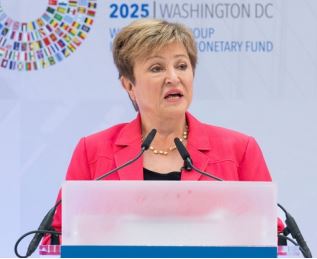
At the 2025 World Bank Group/IMF Spring Meetings, IMF Managing Director Kristalina Georgieva painted a stark picture of the potential repercussions, particularly the inflationary pressures on product prices in affected economies. She explained that modern supply chains are so interconnected that a tariff in one country can trigger price increases for products globally. “The cost of a single item can be influenced by tariffs in dozens of countries,” Georgieva said.
The IMF’s warning underscores the growing uncertainty that these protectionist policies create for businesses and governments alike. As tariff rates fluctuate, planning for future investments and consumer demand becomes increasingly difficult, leading to a delay in decisions across industries. “We’re seeing ships at sea unsure of which port to dock at,” Georgieva noted, reflecting the uncertainty plaguing global trade.
The IMF also stressed that while tariffs may increase government revenue in the short term, they ultimately redirect and reduce economic activity. Past evidence shows that the burden of higher tariffs often falls not only on the trading partners but also on importers, who absorb part of the costs, and consumers, who face higher prices for goods.
The IMF’s latest remarks highlight the urgent need for international cooperation to prevent further economic destabilization, particularly for developing economies already struggling with recovery efforts. If these protectionist measures continue to escalate, global economic stability could be at serious risk.