
















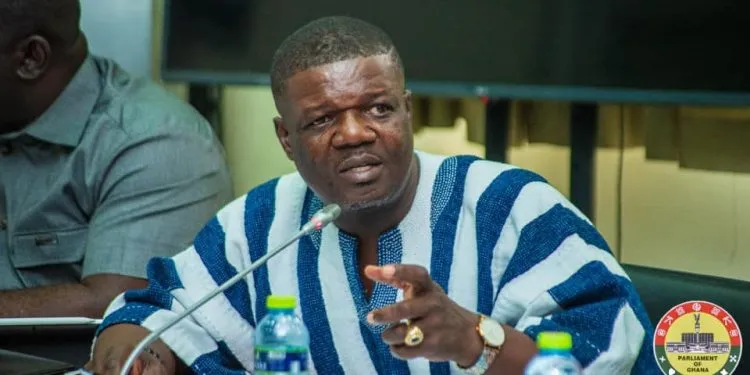
Suit seeks constitutional clarity on freedom of association and representation within the legal profession
A new constitutional case filed at the Supreme Court is set to test the limits of institutional exclusivity within Ghana’s legal profession, as prominent lawyer and MP Rockson-Nelson Dafeamekpor, private legal practitioner Israel Tetteh, and the Ghana Law Society challenge the long-standing dominance of the Ghana Bar Association (GBA).
At the heart of the suit is a bold assertion: that the GBA should no longer be treated as the sole or official representative of lawyers in Ghana.
Filed under the Constitution’s freedom of association provisions, the plaintiffs argue that references to the “Ghana Bar Association” in the 1992 Constitution must be interpreted broadly to include all associations of legal professionals, not just the historic and now contested GBA.
“Any interpretation that grants the current Ghana Bar Association exclusive powers, rights or privileges offends Articles 17 and 21(1)(e) of the Constitution,” the suit states.
Article 17 guarantees equality before the law, while Article 21(1)(e) affirms every citizen’s right to freedom of association.
Speaking to the press after filing the case, Dafeamekpor clarified that the plaintiffs are not seeking to abolish the GBA, but are challenging the perception and institutional practice that elevates the GBA as the only legitimate body representing lawyers.
“We are not against the existence of the GBA,” Dafeamekpor said. “We are against the idea that one private association should be treated as if it is the only voice of lawyers in Ghana.”
The plaintiffs are seeking a series of declarations from the Supreme Court, including that:
-
No lawyer or legal body should be compelled—explicitly or implicitly—to be affiliated with the GBA;
-
The GBA cannot be the exclusive gateway for recognition, rights, or participation in legal discourse;
-
Other lawful associations of lawyers are entitled to equal standing and recognition under the law.
Co-plaintiff Israel Tetteh emphasized the broader constitutional principle at play:
“Freedom of association means any lawyer or group of lawyers can form or join any association and be constitutionally entitled to equal recognition,” he said.
Legal analysts say the case could have far-reaching implications for the legal profession in Ghana, especially at a time when some lawyers have expressed growing discontent with how the GBA represents their interests—or fails to.
If successful, the suit could open the legal space to a more pluralistic and competitive ecosystem, with multiple associations coexisting, advocating, and contributing to the development of law and policy.
The case is also being watched closely by other professional bodies and civil society groups, who see it as part of a broader movement to challenge legacy monopolies in Ghana’s professional and civic institutions.
A hearing date is yet to be set by the Supreme Court.






