
















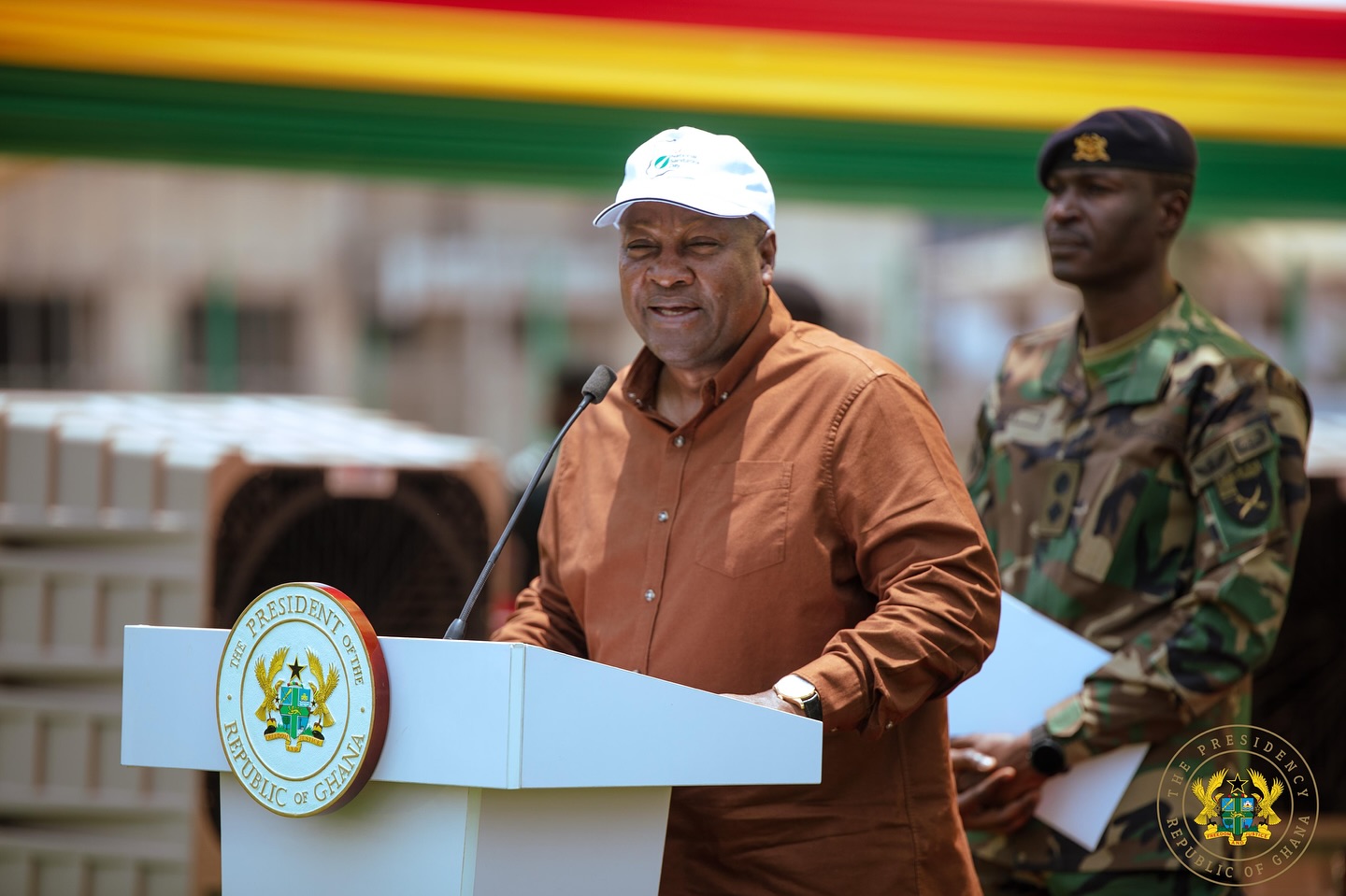
President John Dramani Mahama has turned to large-scale industrial infrastructure as part of efforts to expand Ghana’s manufacturing capacity, attract fresh investment and reduce the country’s dependence on imported goods.
The President on Thursday, October 15, cut the sod for the construction of the 1,238-acre Afienya Industrial Park, a major development expected to provide space for more than 120 enterprises to establish factories and undertake production.
The project is expected to ease pressure on existing industrial facilities, particularly the Tema Export Processing Zone, where available space has been exhausted amid growing demand from investors seeking to establish businesses in Ghana.
The Afienya Industrial Park will be equipped with essential infrastructure, including electricity, water supply, road networks and waste treatment facilities, to support industrial operations and reduce the challenges businesses face in setting up production facilities.
Speaking at the sod-cutting ceremony, President Mahama said the development would help accommodate growing investor interest while creating opportunities to expand domestic production.
The project also forms part of the government’s broader strategy to reposition the economy towards manufacturing, value addition and export-led growth.
President Mahama disclosed that the proposed $10 billion New Economy Programme would support infrastructure development at the park, as the government seeks to create an enabling environment for businesses to produce more goods locally.
The initiative is expected to contribute to efforts to reduce imports, increase exports and create employment opportunities through the expansion of industrial activity.
With capacity for more than 120 enterprises, the Afienya Industrial Park is expected to provide a platform for businesses to establish factories and scale up production, although its eventual economic impact will depend on the pace of infrastructure delivery and the ability to attract investors.
The project marks another step in the government’s industrialisation agenda, with the focus on expanding productive capacity and strengthening Ghana’s position as a destination for manufacturing investment.






