
















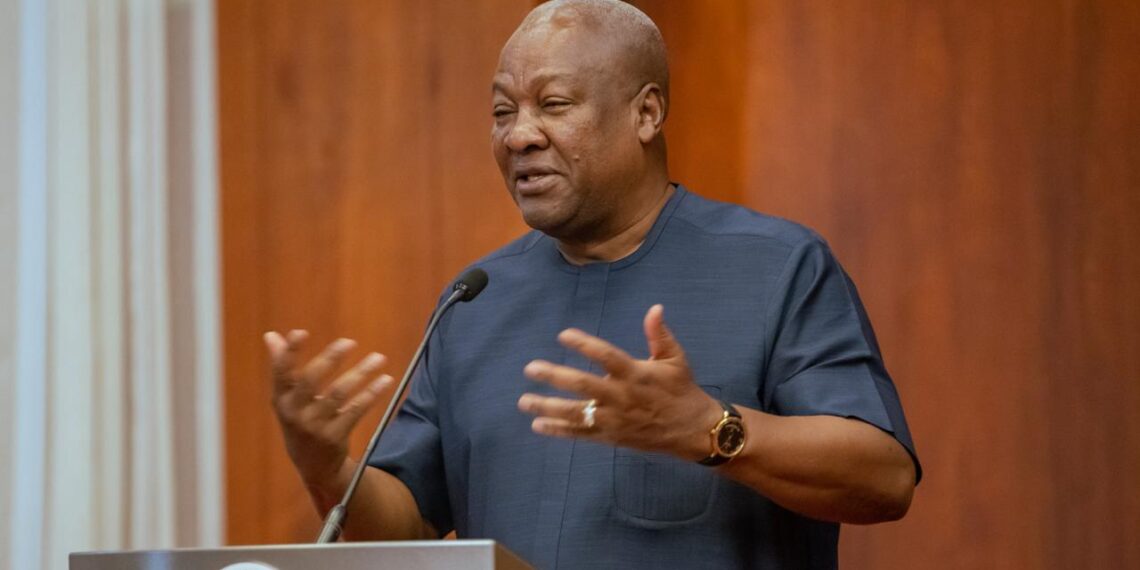
President John Dramani Mahama has called for a fundamental shift in Ghana’s relationship with the European Union (EU), urging both sides to move beyond traditional aid arrangements and embrace a partnership driven by investment, innovation and shared prosperity.
Speaking at the opening of the 2026 Ghana-EU Partnership Dialogue in Accra, the President said the future of Ghana-EU cooperation must reflect the realities of the 21st century and be anchored on mutual respect rather than dependency.
“As Ghana and Europe look ahead, our task is clear. We must build a partnership that reflects the realities of the 21st century—a partnership founded on mutual respect rather than dependency, investment rather than aid, innovation rather than inertia, and shared prosperity rather than unequal opportunity,” he stated.
The annual Ghana-EU Partnership Dialogue serves as a high-level platform for both parties to discuss economic cooperation, regional security and sustainable development. This year’s meeting coincided with the 50th anniversary of relations between Ghana and the European Union.
President Mahama stressed that Ghana’s youthful population presents a significant opportunity for both Ghana and Europe. With more than half of the country’s population under the age of 30, he said investments in education, entrepreneurship, innovation and skills development would be critical to unlocking future growth.
He welcomed ongoing collaboration in vocational training, global mobility, gender equality and entrepreneurship, noting that empowering young people would strengthen the partnership and accelerate development.
“When our young people succeed, our partnership succeeds,” he said, adding that Ghana’s ambition is to become a leading industrial, digital and logistics hub on the African continent.
The President also highlighted migration as an area where deeper cooperation is needed. He argued that properly managed migration can contribute significantly to development and called for expanded legal migration pathways and stronger skills partnerships.
He urged participants at the dialogue to focus not only on reviewing existing cooperation but also on setting more ambitious goals that create jobs, expand business opportunities, enhance security and improve living standards.
European Union Ambassador to Ghana, Rune Skinnebach, reaffirmed the EU’s commitment to strengthening ties with Ghana, describing the bloc as the country’s largest trading partner, leading source of foreign direct investment and a key development partner.
While acknowledging areas where Ghana and the EU may not always agree, the Ambassador pledged continued constructive engagement on matters of mutual interest, including addressing the enduring legacies of slavery through dialogue and cooperation.
Foreign Affairs Minister Samuel Okudzeto Ablakwa highlighted major milestones achieved in Ghana-EU relations over the past year. He noted that Ghana became the first African country to formalise a security and defence partnership with the EU and the first on the continent to secure sustainable legal timber certification under the Forest Law Enforcement, Governance and Trade (FLEGT) licensing scheme.
The dialogue is expected to deepen collaboration between Ghana and the EU as both sides seek to expand trade, investment and strategic cooperation in the years ahead.






